

Yes, you can order authentic Korean food products online in Australia, including pantry staples, banchan, snacks and seasonings. What’s available and how delivery works depends on your location. Delivery charges are shown at checkout and vary by delivery location.
Planning a Korean meal is easier when you can browse ingredients and everyday favourites together. Before filling your pantry, consider freshness, delivery coverage and the final cost.
This guide explains the kinds of Korean groceries you can find online, how delivery across Australia works, and what to know about prices and discounts. You’ll get a practical overview of pantry staples, ready-to-eat sides, snacks and seasonings, so you can choose what suits your kitchen and your next meal.
Key Takeaways
- Find out how kimchi and banchan can add ready-to-serve flavour and variety to everyday meals.
- Delivery timing and charges depend on the destination, with the delivery charge shown at checkout.
- Learn how Korean chilli powder and seasonings can shape the heat, colour and savoury depth of a dish.
- See what can affect online grocery totals, including pack sizes and available discounts.
- Explore Korean pantry staples, snacks and drinks available online, and how Gonje’s food delivery offerings can fit your next shop.
Kimchi and banchan
Kimchi and banchan bring sharp, savoury and fresh flavours to a Korean meal. Kimchi is fermented vegetables, often cabbage or radish, seasoned with chilli, garlic and other ingredients. Banchan are small side dishes served alongside rice and a main. For example, pair napa cabbage kimchi with seasoned spinach, pickled radish and rice. These sides add contrast without needing another main dish.
When choosing kimchi, start with the vegetable and flavour you enjoy. Baechu kimchi is made with napa cabbage and suits rice bowls, noodles and soups. Kkakdugi is made with diced radish, giving it a crisp texture, while cucumber kimchi offers another fresh-tasting option. Compare product descriptions to distinguish styles, and check the ingredient list to see what seasons each recipe.
How can you tell if a Korean food product is authentic? Look for a clear Korean product name, a description of its Korean style, and ingredient details that match the food. A Korean origin statement tells you where the product was made, while the recipe and ingredients help explain its style.
Popular Korean pantry staples include gochujang, doenjang, gochugaru, soy sauce, sesame oil, dried seaweed, rice and noodles. Gochujang adds a fermented, sweet chilli flavour to marinades and sauces. Doenjang brings savoury depth to soups, while gochugaru, Korean chilli powder, adds heat and colour to kimchi. Choose staples according to the dishes you cook.
- Baechu kimchi: Serve it with rice, or chop it into a noodle bowl.
- Kkakdugi: Pair crisp radish cubes with a warm rice meal.
- Seasoned spinach: Add this mild banchan beside spicy noodles.
- Pickled radish: Use its tangy crunch to balance savoury dishes.
How can you check ingredient labels, allergens and country of origin on Korean food products? Read the product details and ingredient panel before adding an item to your grocery order. Check allergen information for ingredients such as soy, sesame, wheat or seafood, and look for the country-of-origin statement to see where it was made.
Once opened, kimchi and prepared banchan need different handling from dry staples such as rice or seaweed. Follow each pack’s storage directions and use a clean utensil when serving from a jar. For a simple meal, pair rice with cabbage kimchi, seasoned spinach and a fried egg. For noodles, serve kkakdugi and seaweed on the side.
Do you deliver Korean groceries across Australia?
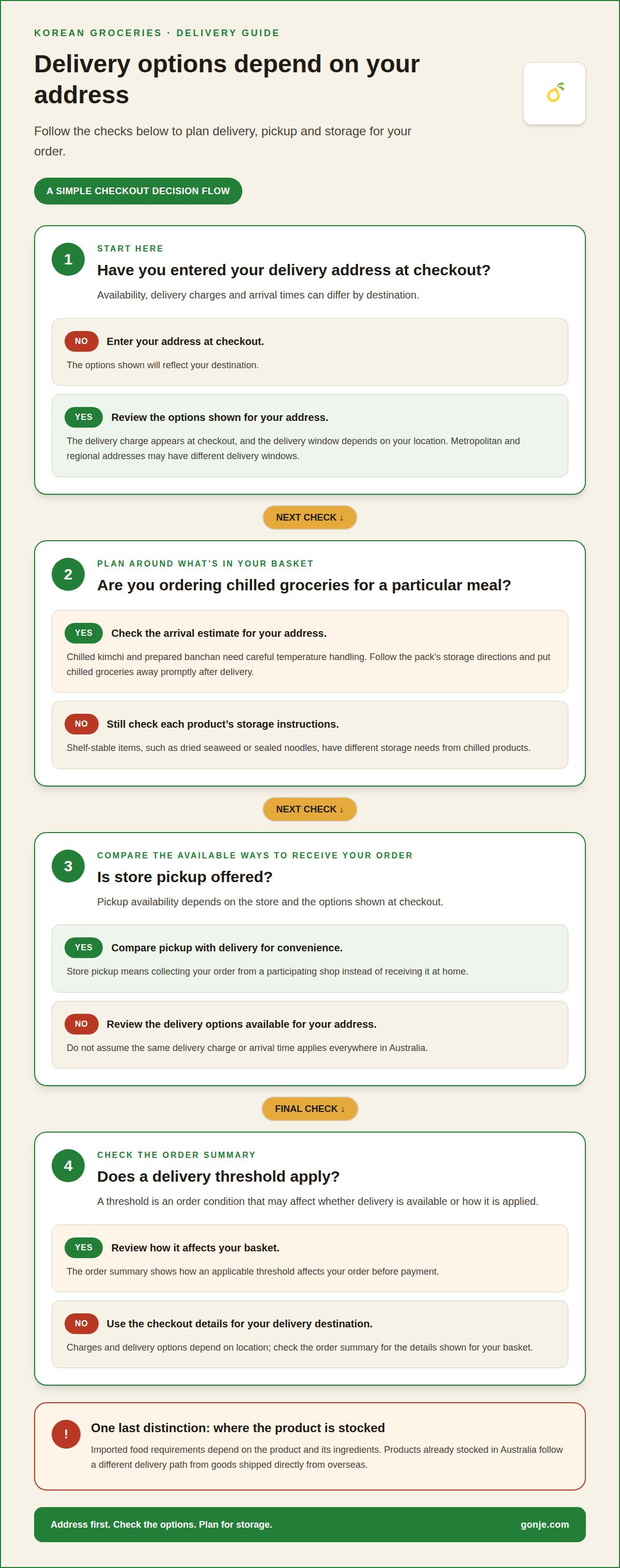
Korean groceries can be delivered across Australia, but the options depend on the delivery address. A household in one location may see different availability, charges and arrival times from a household elsewhere. Distance and the local delivery network affect how an order reaches you. Enter your address at checkout to see the options available, whether you’re buying kimchi, pantry staples or snacks.
Delivery charges depend on the delivery location and appear at checkout. Delivery time also depends on the address. A metropolitan address and a regional address may have different delivery windows, so plan around the estimate shown for your location, especially when ordering chilled groceries for a particular meal. Don’t assume the charge or arrival time will be the same everywhere in Australia. The checkout details reflect your destination.
Delivery thresholds and store pickup are separate options. A threshold is an order condition that may affect whether delivery is available or how it’s applied. Store pickup means collecting an order from a participating shop instead of receiving it at home. Availability depends on the store and the options shown at checkout. If pickup is offered, compare it with delivery for convenience. If a threshold applies, the order summary shows how it affects your basket before payment.
What Australian import and biosecurity rules apply to ordering Korean food online? Imported food is subject to requirements that depend on the product and its ingredients. Products already stocked in Australia follow a different delivery path from goods shipped directly from overseas.
Which Korean food products need refrigeration or special handling during delivery? Chilled kimchi and prepared banchan need careful temperature handling and refrigeration according to their pack directions. Shelf-stable items, such as dried seaweed or sealed noodles, have different storage needs. Read each product’s storage instructions when planning your order, and put chilled groceries away promptly after delivery.
When ordering chilled and shelf-stable items, consider how each fits your plans. Kimchi for tonight’s rice bowl needs different handling from dried seaweed for later. Review the delivery details for your address, then choose products that suit your meal and storage space. A premium pantry selection can still be practical if it fits your kitchen routine. Plan by entering your delivery address, reviewing the available options, then organising storage for the groceries when they arrive.
Korean chilli powder and seasonings
Gochugaru is Korean chilli powder, used for colour, warmth and flavour. Its texture ranges from fine powder to coarse flakes. Fine gochugaru blends smoothly into sauces and marinades, while coarser flakes suit kimchi seasoning and dishes where the chilli texture remains visible. Check the product description for the grind and intended use. That helps match the ingredient to your recipe rather than choosing by colour alone.
Gochugaru products vary in heat and flavour. Some taste fruity and mild, while others bring a stronger chilli kick. Start with a small amount in a sauce or soup, then adjust to taste. For bibimbap, mix gochugaru with sesame oil and a little soy sauce. For a marinade, combine it with garlic and other seasonings. The product’s heat description can guide your choice, but your palate determines the final balance.
Korean seasonings work together to build savoury depth. Ganjang, or Korean soy sauce, adds salt and umami to dipping sauces and marinades. Guk-ganjang, also called soup soy sauce, seasons soups and can taste saltier. Sesame oil adds a nutty aroma to rice bowls and vegetables, while toasted sesame seeds add texture as a finishing touch. Keep these ingredients separate in your pantry because each has a different role.
- Gochugaru: Stir into a sauce, soup, or marinade for chilli flavour.
- Ganjang: Add to a dipping sauce or use to season vegetables.
- Sesame oil: Drizzle over rice or cooked greens just before serving.
- Toasted sesame seeds: Sprinkle over noodles for a nutty finish.
For a simple cucumber side, season sliced cucumber with gochugaru, garlic, sesame oil and a splash of soy sauce. For a tofu marinade, combine gochugaru, ganjang, garlic and a little water. These examples show why ingredient descriptions matter: fine powder coats a smooth sauce evenly, while coarse flakes add visible texture to vegetables.
When shopping for Korean seasonings, read the product name and ingredient panel together. A chilli seasoning blend may contain ingredients beyond chilli, while plain gochugaru gives you more control over a recipe. Check whether the listing describes flakes, powder or a prepared sauce. Then consider the dish: a mild rice bowl may need less chilli than a robust soup. Follow pack directions for storing opened seasonings, and use clean, dry utensils to keep powders free-flowing.
Build a useful pantry around ingredients you cook with regularly. Pair gochugaru with ganjang for quick sauces, then add sesame oil for aroma. For soup, measure seasonings and add them gradually. This keeps the chilli, salt and toasted flavours distinct instead of letting them overwhelm the dish. A few well-chosen Korean seasonings can work across noodles, rice, tofu and vegetables.
Online prices and discounts
Online Korean grocery prices depend on the product and pack size. A single packet and a multipack offer different quantities for your pantry. Compare the listed amount with the weight or volume, not just the product name. For example, Ottogi Jin Ramen mild comes as a 120 g packet or a five-pack. That difference matters if you cook it often, share meals, or want one packet to try first.
Product examples also show why a basket can contain items with different uses and quantities. Nongshim Shin Ramyun is listed as a 120 g noodle pack, while Nongshim AnSung TangMyun is 125 g. Nongshim Chapagetti spicy noodles comes in a 137 g pack. These weights help you compare package size, but they don’t tell you how many serves you’ll make. Check each listing’s pack details and serving suggestions before deciding what suits your household.
Multipacks can be useful when you already know a product belongs in your regular meals. Ottogi Jin Jjambbong spicy seafood noodles is listed as a 130 g packet and a five-pack. Ottogi Jin Ramen mild also has a five-pack option. Think about storage space, how quickly you’ll use the food, and whether every pack suits your taste. A larger quantity isn’t automatically better value if some of it sits unused.
- Compare pack sizes: Check the weight or volume shown for each listing.
- Match quantity to use: Choose a multipack for a regular favourite, not an uncertain trial.
- Review the basket: Look at product quantities and delivery charges before placing the order.
Snacks and drinks add another kind of quantity comparison. Binggrae banana-flavoured milk drink is listed in a 200 ml container. Lotte Milkis comes in a 340 ml bottle. Wel-Pac premium dried seaweed is listed as a 56.7 g pack. Compare the item’s volume or weight with how you plan to serve it. A drink for one meal has a different role from seaweed kept for several recipes.
Discounts can change the amount shown for a grocery basket, so read the offer details displayed with a product or at checkout. Check which items qualify, whether the offer applies to one pack or a multipack, and whether it changes the total before delivery charges. Don’t assume every Korean product has the same promotion. The basket summary brings together selected products, quantities, displayed discounts and delivery charges.
For a practical comparison, choose the product first, then compare available pack sizes. A 120 g noodle packet may suit a first taste, while a five-pack may suit a familiar pantry staple. Check the product weight, offer conditions, and basket total together. This makes the choice clearer than judging a discount label alone. It also helps keep grocery spending tied to the meals you plan to cook, rather than to extra packs you may not use.
What Korean food products can Australians buy online?
Australian online grocery ranges can bring together Korean pantry goods, chilled foods, snacks, drinks, and cooking essentials. Think about the meal first, then choose products for its different parts. A table for sharing might need a central dish, small accompaniments, and drinks. A quick weekday meal may call for fewer ingredients and less preparation.
Some listings focus on fresh or chilled groceries, while others suit cupboard storage. That difference affects how you plan meals and put groceries away. For example, Pokka Jasmine Green Tea is listed in a 1.5-litre bottle, giving households a larger drink option to serve with a shared meal. Product descriptions can also show whether an item is ready to serve or needs cooking.
Snacks and drinks can make a grocery basket useful beyond dinner. Choose something to serve alongside a meal or keep a sealed item for a later break. For a Korean-inspired spread, combine a main dish with contrasting sides and a drink. Check listing descriptions for serving format, storage guidance and pack information before choosing.
Fresh, chilled and shelf-stable products suit different kitchen routines. A chilled side can complement tonight’s meal, while dry pantry goods can wait for another cooking day. Make room for items that need refrigeration and group cupboard goods where they’re easy to find. This makes the basket simpler to put away and use.
- For a shared table: Select a main, accompaniments, and a drink.
- For a quick meal: Focus on ready-to-serve or simple-to-prepare options.
- For a pantry restock: Choose shelf-stable goods you’ll use in future meals.
- For a new flavour: Add one unfamiliar item to a familiar meal plan.
Authentic Korean food products online can suit regular cooking or an occasional Korean-inspired dinner. Choose based on the number of meals you’re planning, your storage space and how much preparation you’re happy to do. Product details can help you decide which format fits your household, whether you’re stocking up or trying something new.
For a more considered basket, browse Korean groceries and specialty foods and select items that fit your next meal or pantry restock. Buying authentic Korean food products online can be a simple way to bring a new dish into your kitchen routine.
Gonje: Multicultural & Specialty Food Delivery
Gonje connects customers with multicultural and specialty food delivery, including Korean groceries for home cooking. Choose pantry items and sides for a meal, or opt for ready-to-eat restaurant meals when you’d rather skip the preparation. Everyday groceries can round out a household shop. It’s a practical way to find Korean flavours alongside everyday food.
For a Korean-inspired dinner, pair grocery staples with a ready-to-eat meal, or build a pantry basket around the dishes you cook most. Gonje brings these food choices together through its delivery offerings. Contact Gonje to discuss the food delivery options that suit your next meal or grocery shop.
Make your next Korean meal your own
Choose a dish you’re keen to make, then let its flavours guide your next pantry shop. A new noodle bowl, rice meal or shared table can start with one useful ingredient and grow from there. Buying authentic Korean food products online makes it easier to bring those flavours into your regular kitchen routine.
Gonje offers Multicultural & Specialty Food Delivery and Ready to Eat Restaurant Meals Delivery. Its Software as a Service offering supports food businesses, while its delivery options serve people choosing groceries or prepared meals. Whether you’re planning a home-cooked dinner or looking for a ready-to-eat option, choose what suits your table.
Contact Gonje about Korean groceries and take the next step towards a meal that feels right for you.
Frequently Asked Questions
Can I get fresh Korean pantry items online?
Yes, online grocery listings can include fresh Korean items alongside shelf-stable pantry goods. Selection depends on the shop serving your delivery address. If you’re planning a meal with fresh kimchi or banchan, decide when you’ll serve it and follow the storage directions on the packaging. Dry goods, such as noodles and seaweed, can be saved for later meals. This mix can help one grocery order fit several kitchen plans.
Comparing Top Sites: What Really Matters?
Useful details on Korean grocery listings include the product name, ingredients, pack size, storage directions and country of origin. These help distinguish similar items, such as chilli flakes from a prepared chilli blend. Delivery eligibility and the final basket summary also matter. Consider the product information alongside the checkout total, including the item, quantity, delivery charge and any displayed discount.
Why Shop at Korean Market Online Stores in 2025?
Shopping online lets you browse Korean ingredients and everyday favourites from home. Search by product or meal idea, then build a basket around dishes you plan to cook. For example, noodles, rice and seasonings can make up a simple pantry restock. Check product descriptions and delivery details before ordering, and use online shopping to find familiar ingredients again.
Which online Korean grocery stores in Australia sell authentic Korean food?
Gonje’s marketplace connects customers with independent multicultural food vendors and specialty suppliers in Australia. Its Multicultural & Specialty Food Delivery offering is relevant for shoppers seeking international ingredients and pantry staples. Product selections come from participating sellers, rather than one central grocery range. Enter your postcode on the marketplace to see which vendors and grocery options serve your delivery area.
How much do Korean food products cost at Australian online stores?
The basket total depends on the items, pack sizes, quantities and any discounts applied to eligible products. Chilled sides, noodles, drinks and seasonings each have their own listing and pack details. Add the products you need, then review the basket summary before paying. It brings together selected quantities and applicable delivery charges so you can understand the total for your order.
Which Australian online retailers offer the best prices and shipping for Korean groceries?
There isn’t one “best” choice for every household, since product selection and delivery depend on the destination. Gonje’s marketplace connects shoppers with multicultural food vendors and everyday grocery sellers. Check the items and pack sizes available for your postcode, then review the delivery charge and order total at checkout. This helps you decide whether the basket suits your planned meals and delivery needs.
How long does delivery take, and what are the shipping costs for Korean food in Australia?
Delivery time and charges depend on the address receiving the order. On Gonje, grocery orders are delivered within 24 hours, with same-day delivery where the vendor supports it. Enter your postcode to see delivery availability for your area, then review the charge shown at checkout. The destination and participating vendor determine the options shown for your order.


