
Polish food isn’t always found in one aisle. If you’re deciding where to buy Polish food in Australia, start with Polish delicatessens, European specialty grocers and multicultural food delivery services. These are useful places to look for cured meats and sausages, confectionery, pantry staples and chocolate-covered fruit.
A familiar sausage or favourite sweet can be hard to track down if you don’t know which shelves to try. You might find meats at a local shop, and sweets or pantry goods through a specialist online range. Search by food type as well as by shop to narrow the options.
This guide explains where to look and what to expect from different sources. You’ll learn how to find Polish ham and sausages, what to look for in confectionery and chocolate-covered fruit, and how grocery delivery can make familiar flavours easier to bring home.
Key Takeaways
- Look beyond supermarket shelves: Polish delis and European grocers can help you track down specialist meats, sweets and pantry goods.
- For fresh pierogi, bread and cakes, focus your search on Polish bakeries and food businesses that make or sell these items locally.
- Use local community events and markets to discover Polish food stalls and meet the people behind familiar regional dishes.
- Learn the difference between traditional Polish staples so you can choose ingredients and prepared meals that suit what you want to cook or eat.
- Explore multicultural food delivery when you want a practical way to find specialty foods and ready-to-eat restaurant meals.
Which Australian supermarkets stock Polish foods such as pierogi, kielbasa and pickles?
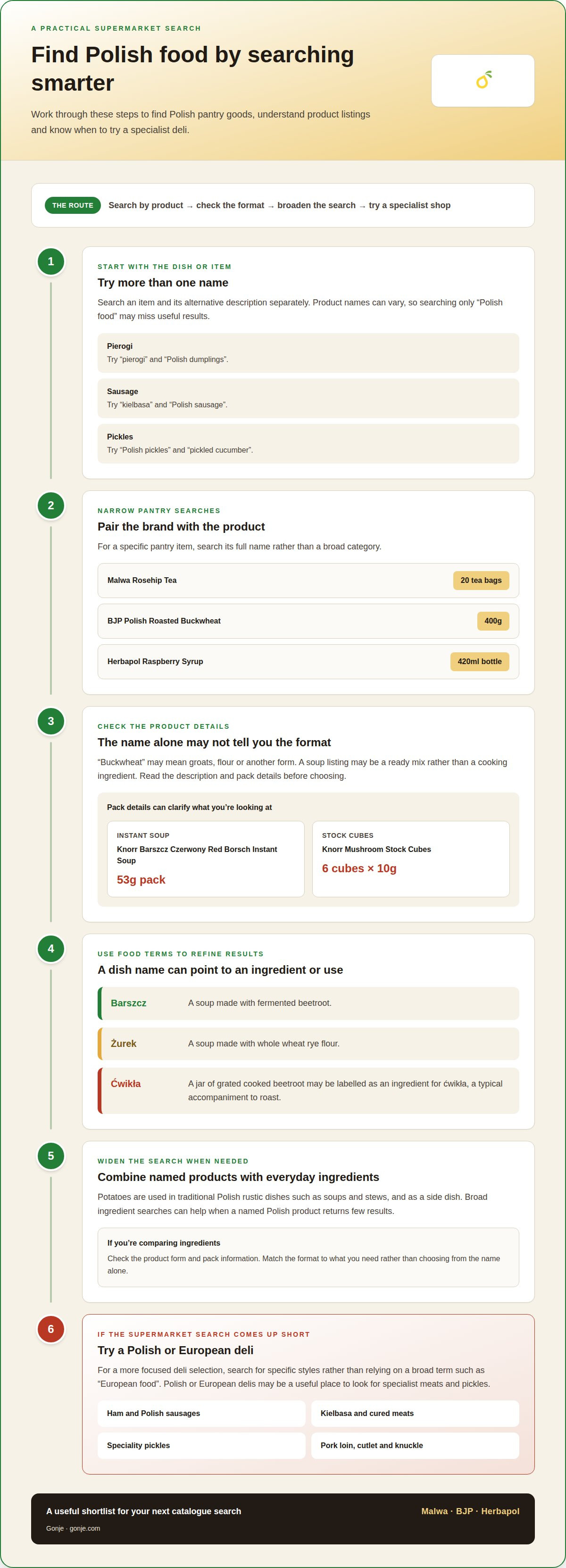
No single supermarket stocks every Polish speciality. Start with the online catalogues of supermarkets near you, then search by dish or product name. Try “pierogi”, “kielbasa”, “Polish sausage” and “Polish pickles” separately. Product names can vary, so searching only “Polish food” may miss useful results.
Supermarkets are a practical place to look for familiar pantry staples and everyday ingredients. For specific Polish brands, use the full name. Search for Malwa Rosehip Tea, BJP Polish Roasted Buckwheat or Herbapol Raspberry Syrup. These examples also help distinguish a Polish product from a generic alternative. Malwa Rosehip Tea comes in a box of 20 tea bags. BJP Polish Roasted Buckwheat contains 400g of buckwheat groats. Herbapol Raspberry Syrup comes in a 420ml bottle.
Use a simple search sequence to narrow the results:
- Search the dish name, such as “pierogi”, then try “Polish dumplings”.
- Search “kielbasa” and “Polish sausage” to catch different naming choices.
- Look for Polish pickles by searching “pickled cucumber” as well as “Polish pickles”.
- For pantry goods, search a brand and product together, such as “Herbapol Raspberry Syrup”.
Then read the product description before choosing. “Buckwheat” may describe groats, flour or another form, while a soup product may be a ready mix rather than a cooking ingredient. Knorr Barszcz Czerwony Red Borsch Instant Soup is sold in a 53g pack. Knorr Mushroom Stock Cubes are sold as a pack of six 10g cubes. Those details show why the pack description matters as much as the search result.
Polish food names can also point to a dish’s ingredients or use. Barszcz is a soup made with fermented beetroot, while żurek is made with whole wheat rye flour. A jar of grated cooked beetroot may be labelled as an ingredient for ćwikła, a typical accompaniment to roast. These terms can help you find ingredients and prepared foods beyond the main supermarket aisle.
For meat, search for the specific style instead of relying on a broad term such as “European food”. Ham and Polish sausages are common cured meats in traditional Polish dishes. Pork loin, cutlet and knuckle are also common pork choices. If the catalogue has no useful matches, try a Polish or European deli for kielbasa, cured meats and speciality pickles.
Use a supermarket for a Polish pantry item you can identify, and a specialist grocer for a more focused deli selection. Keep a short list of exact names, including Malwa, BJP and Herbapol, to make future catalogue searches quicker.
Keep a flexible shortlist rather than treating one catalogue result as a complete picture of what a store carries. A listing can help identify a product, but check its current status before making a special trip or planning a meal around it. If a familiar item is unavailable, try the product’s exact name again later or look for another suitable ingredient already on your list. For a pantry staple, note the product form and pack details so you can compare like with like rather than choosing from a name alone.
Potatoes are another useful search when planning Polish-style home cooking. They are used in traditional Polish rustic dishes such as soups and stews, and as a side dish, so they can be relevant even when a search for a named Polish product returns little. For stock, check the pack information: Knorr Mushroom Stock Cubes are sold as a pack of six 10g cubes, with the value shown as 6 x 10. Match that format to the amount your recipe needs before buying. Combining broad ingredient searches with exact brand and dish names can make supermarket browsing more practical, while leaving specialist products that do not appear in the catalogue for a deli or specialist grocer.
Where can I buy Polish cakes, bread and fresh pierogi in Australia?
For Polish cakes and bread, start with Polish bakeries, European-style bakeries and Polish delicatessens. Search maps and local business directories for “Polish bakery”, “Polish deli” and your suburb or city. For fresh pierogi, look for Polish food shops and makers that prepare dumplings locally. Check whether products are freshly made, packaged or frozen.
Search for the item by its Polish name and English description. For example, try “pączki Polish doughnuts”, “sernik Polish cheesecake” or “makowiec poppy seed cake”. For bread, search “Polish rye bread” or “Polish sourdough”. These terms can surface bakeries that describe their food in English, Polish or both. If a map search shows general European bakeries, read the menu or product list for recognisable Polish names.
For pierogi, try different spellings and descriptions. Search “pierogi”, “Polish dumplings” and “pierogi ruskie” if you want that named style. A shop may describe them by filling instead, such as potato and cheese, meat, cabbage or mushroom. Check whether the dumplings are fresh, frozen, cooked or ready to heat. Don’t assume “homemade” means freshly prepared that day.
Use this search sequence to make the results more useful:
- Enter a product name and your suburb, such as “makowiec Brisbane”.
- Try a broader city search if the suburb returns few relevant businesses.
- Search a second spelling or English description, such as “poppy seed roll”.
- Read the menu, product details or business posts for the exact item and format.
For a special occasion, search for cakes by name rather than just “Polish sweets”. Sernik is a Polish-style cheesecake; makowiec is a poppy seed roll or cake. Pączki are doughnuts often associated with festive traditions. These names are a clearer starting point when bakeries list seasonal items separately from their everyday range. Some businesses take cake orders, while others sell slices or ready-made loaves.
Fresh bread and pastries may follow a different routine from packaged groceries. Bakeries may share menus on their own websites or social pages, while delis may list cakes and dumplings alongside other prepared foods. Check whether an item is sold whole, by portion or uncooked. This helps distinguish frozen pierogi from fresh dumplings made locally.
If local results are limited, widen your search to nearby suburbs and Polish community pages. Search “Polish food market” alongside a city name, then look for bakery or dumpling stalls in event listings. Keep a short list of names, spellings and preferred fillings. It makes your next search quicker, whether you want rye bread, makowiec for coffee or pierogi for dinner.
How can I find Polish delis, markets and food festivals near me in Australia?
Start with a map search for “Polish deli” and your suburb or city. Try “Polish grocery”, “European deli” and “Polish food shop” as separate searches. A business may use a broad European label even when its shelves include Polish goods. Read its description and recent posts for clues such as Polish groceries, deli meats or imported confectionery.
Next, search for the exact item you want alongside your location. For example, try “Polish sausage Adelaide”, “Polish pickles Perth” or “Polish sweets Hobart”. This can reveal a deli or specialty grocer that a general search misses. Add “market stall” when looking for local sellers at a community market, and save useful business names in a phone note.
Use these search terms to broaden or refine the results:
- “Polish deli” plus your suburb, city or state.
- “Polish community market” plus your city.
- “Polish food festival” or “Polish cultural festival” with your location.
- A product name, such as “kielbasa”, plus “deli” or “market stall”.
For festivals, check local council event listings and community organisation announcements. Phrases such as “Polish festival Sydney” or “Polish cultural event Melbourne” can bring up event pages and social posts. Look for food stalls, Polish cuisine or market vendors in the event description. Some cultural events focus on performances rather than food, so check the published programme.
Markets offer another way to find food sellers. Search “European market” with your city, then scan stallholder lists for Polish names or food descriptions. Event pages can provide the location, opening details and participating stalls. Save the listing before travelling, especially if you’re looking for a particular item such as cured meat, sweets or a prepared dish.
Look for practical details in each listing. A deli’s product categories can show whether it focuses on groceries, fresh foods or prepared meals. A market post may name a stall, while a festival programme can list food vendors separately. Search the business name with “Polish food” or “menu” to find its own descriptions and distinguish a specialist food seller from a general event listing.
Before setting out, note the address, the item you want and the listing that mentioned it. For a festival or market, save the event page and look for stall updates. For a deli, record its name and find its latest product information. This keeps your search focused, whether you want Polish pantry staples or a neighbourhood event with food stalls.
Build a local list as you search. Save useful results under clear labels such as “Polish deli”, “market” and “festival”. Add search terms that worked, such as “Polish groceries” or “Polish cultural event”. The next time you’re looking for a shop or food gathering, these specific terms will help you pick up where you left off.
Traditional polish
Traditional Polish food brings together hearty soups, pork dishes, mushrooms and preserved vegetables. Learning the names can help you recognise what to order or look for in a deli. Kotlet schabowy, for example, is a fried, breaded pork cutlet. It’s a useful starting point when you want a familiar main meal rather than a pantry ingredient.
Polish meals can include distinct courses. Smoked herring is often served as an appetiser after soup and before the main course. Smoked salmon can also add a deep, smoky flavour. Traditional cooking used fire to impart smoky flavours, so smoked ingredients remain a useful clue when reading a menu. Look for “smoked” alongside fish or meat descriptions.
Soup names point to different ingredients. Żurek is made with whole wheat rye flour, while barszcz is made with fermented beetroot. These are different Polish dishes, not interchangeable versions of one soup. A menu may spell barszcz as “borscht” or describe it as beetroot soup. Search both names to improve your chances of finding it.
Other traditional foods are built around vegetables and preserved ingredients:
- Ćwikła: grated cooked beetroot, commonly served as an accompaniment to roast.
- Sauerkraut: shredded cabbage fermented with salt and spices.
- Cabbage: used in salads, dumpling mixtures and soups.
- Potatoes: served alongside meals or used in rustic soups and stews.
These ingredients can guide a meal even when you’re cooking with local Australian produce. Serve sauerkraut beside roast meat, or use cabbage in soup and dumpling fillings. Grated cooked beetroot provides the base for ćwikła. For a Polish-style spread, pair a main dish with a vegetable side rather than treating each traditional food as a separate meal.
Mushrooms feature in Polish cooking beyond a single soup. Chanterelles, parasol mushrooms and boletus are among the varieties used, and mushroom hunting is part of Polish food traditions. On a menu, a named mushroom can signal a particular ingredient. Dried or preserved mushrooms from a deli can be useful for cooking when fresh varieties aren’t available.
Parsnip and celeriac can also be useful in home cooking. Parsnip is used with hearty roasts and as a soup base, while celeriac can be cooked in soup or grated for salad. Add them to a pot with potatoes for a rustic stew, or grate celeriac for a contrasting salad beside a hot main.
To find a dish that suits your table, search by its Polish name and an English description. Try “kotlet schabowy breaded pork cutlet” or “żurek rye soup”. If ordering a meal, compare the listed ingredients with flavours you enjoy. If cooking, use the dish name to guide your shopping list: rye flour for żurek, beetroot for barszcz or mushrooms for a mushroom-led meal.
Gonje: Multicultural & Specialty Food Delivery
Gonje offers Multicultural & Specialty Food Delivery for households looking for foods beyond everyday supermarket staples. It’s a practical option when you want to browse diverse cuisines and specialty food suppliers in one place. For a ready-to-eat meal instead of cooking, Gonje also offers Ready to Eat Restaurant Meals Delivery. Everyday Groceries Delivery can help with the regular items that round out a Polish-inspired meal, such as potatoes, cabbage or soup vegetables. The right option depends on whether you’re planning a home-cooked dish or want a prepared meal. Browse Gonje’s food offerings, then visit gonje.com to explore the platform.
Make your next Polish meal easier to find
Finding where to buy Polish food in Australia can be the start of a new kitchen tradition. Choose a dish you’d like to try, then build your shopping list around its key ingredients. A familiar recipe can make an unfamiliar shop or food listing feel more approachable. Keep the Polish name handy to help recognise the dish across menus and product descriptions.
For an easy way to explore food options, Gonje brings multicultural food delivery and ready-to-eat restaurant meals together. Gonje also offers Software as a Service for merchants. Whether you’re planning a home-cooked meal or looking for prepared food, choose the option that suits your table and routine.
Take the next step at your own pace. Visit Gonje to explore food delivery and find an option for your next meal. There’s always another Polish dish, flavour or family favourite to discover.
Frequently Asked Questions
Where can I buy Polish food online in Australia?
To find Polish food in Australia online, start with specialty food marketplaces and Polish or European grocery shops. Gonje connects customers with specialty suppliers through its multicultural and specialty food delivery service. Search by product or cuisine, then choose ingredients for cooking or ready-to-eat restaurant meals for dinner. Product names and descriptions vary, so try both the Polish name and an English description.
Where can I buy Polish food in Sydney, Melbourne, Brisbane, Perth and Adelaide?
Search for Polish delis, European grocers and Polish bakeries using a city name and the food you want. Try “Polish deli Sydney” or “pierogi Perth”. If you’re deciding where to buy Polish food in Australia, compare shop listings with online food catalogues. Check product descriptions for the specific dish or item. Gonje’s marketplace offers multicultural food options in Melbourne, with delivery availability depending on the supplier’s service area.
What are the best Polish grocery stores in Australia, and do they deliver nationwide?
The best fit depends on whether you need pantry goods, deli items or prepared meals. Compare each store’s range and delivery information with your shopping list. Some online marketplaces connect customers with specialty suppliers, while individual shops set their own delivery areas. Gonje offers multicultural and specialty food delivery, with reach depending on the relevant supplier’s service area. Check each listing to see whether it serves your location.


