

African pantry staples can be ordered online for delivery in Australia. If you want to buy African food online in Australia, compare each item’s price with its pack size before filling your basket. The delivery threshold can also affect how much you need to order.
Planning is easier when you know what each pack contains and what the delivery offer means for your shop. That matters whether you’re restocking familiar Nigerian ingredients or trying a new pantry staple.
This guide covers how delivery works across Australia, what to look for in a free-shipping threshold, and how prices and pack sizes can vary. You’ll also find examples of Nigerian staples available online, from cooking ingredients to everyday pantry items, so you can make a more informed choice for your kitchen.
Key Takeaways
- Learn what Australia-wide delivery means for ordering African and Nigerian pantry staples online.
- See how a free-shipping threshold can shape your basket and help you plan a shop around what you need.
- Compare pack sizes across ingredients such as beans, palm oil, egusi and smoked fish.
- Get a clearer sense of the Nigerian staples to look for when stocking your pantry.
- Find out how multicultural food delivery can help bring familiar groceries and ready-to-eat meals into your routine.
African and Nigerian groceries delivered Australia-wide
Online ordering lets households compare African pantry staples without visiting a specialist shop. Delivery options depend on the retailer, the food and your destination address.
Metro and regional delivery
For metro addresses, check the delivery area and estimated arrival window at checkout. Regional delivery may have different routes and schedules, so enter your full postcode before choosing groceries. Compare the listed delivery option with your plans, especially for foods that need careful storage. A postcode search is the clearest first step.
Marketplace and supermarket availability
African groceries may be listed on Australian marketplaces and supermarket websites, though ranges can vary by listing and location. Search by ingredient as well as cuisine: terms such as “egusi”, “black eye beans” or “palm oil” can help you find relevant items. Check the product name, pack size and seller details before adding anything to your basket.
Online food and ingredient range
Online African grocery ranges can include pantry ingredients, snacks and cooking staples. Nigerian examples include egusi, bitter leaf, iru, smoked fish, black eye beans and palm oil. These ingredients suit different dishes, so match each product description to your recipe. Check whether the listing describes a ground, dried or whole ingredient.
Ordering from an Australian-based retailer differs from buying food directly from overseas. Australian import and biosecurity requirements depend on the food, its ingredients, processing and country of origin. Before buying an overseas listing, identify the exact product and where it will ship from. Foods containing seeds or animal products can have different import considerations from sealed, processed pantry goods.
Read the product listing and label details before paying. Compare the ingredients, allergen information, pack size and country-of-origin details shown for each item. For example, check that the listing describes smoked catfish or dried bitter leaf rather than relying on the photograph alone. Match the brand and product name to the packaging details provided.
Payment methods, returns and refunds depend on the retailer’s checkout and store policy. Before ordering, review the payment options at checkout and the terms for damaged, incorrect or unwanted goods. Keep your order confirmation and the product packaging until you’re satisfied with the delivery. These details help you follow the retailer’s stated process if an issue arises.
This retailer ships to Australian addresses only. Confirm that your destination is in Australia before relying on it for an order. If you’re arranging delivery for someone else, verify their address before choosing products so you can check it against the delivery option at checkout. Keep the intended destination consistent as you review the order details.
Once the address is confirmed, compare the delivery arrangements with the foods in your basket and your preferred timing. Review the product descriptions and order details together before paying, particularly when choosing several ingredients for one recipe. If the destination or delivery option is unclear, seek clarification from the retailer before completing your purchase. This helps you decide whether the listed service suits your address and groceries.
Free-shipping threshold
A free-shipping threshold is the minimum basket value that qualifies an order for free delivery. Retailers set their own terms, so the required amount and eligible destinations can differ. Use the checkout total as your guide, not the value of items before discounts or other adjustments.
Start by entering your Australian delivery address. Add the groceries you need, then look for the delivery charge or free-shipping message in your basket. The checkout shows whether your order meets that retailer’s threshold. If it doesn’t, compare the displayed delivery cost with the price of adding another useful pantry item.
Build your basket around meals you already plan to cook. For example, egusi, palm oil and dried bitter leaf might suit a Nigerian soup. A larger pack of black eye beans could also make sense if you use them regularly. Adding items only to reach a threshold can leave you with food you don’t need.
Check which items count towards the qualifying total. A promotion may apply only to selected products or delivery areas, while discounts can change the basket value used at checkout. Read the offer wording beside the threshold, then confirm the final delivery charge before paying. Keep the order confirmation so you can refer to the delivery terms later.
Shipping coverage and options
Delivery coverage depends on the retailer’s service area and the postcode you enter. An online shop may serve some Australian addresses but offer different options elsewhere. Use the postcode field before planning a large order, particularly for regional destinations. The checkout should show the available delivery options and any charges.
Compare the options shown for your address. Standard parcel delivery may suit sealed pantry goods, while other food items may be handled differently. Check the estimated delivery window, delivery instructions and any conditions for receiving the parcel. Choose an option that fits your household routine and the foods in your basket.
For a fair comparison, consider the full checkout cost, not just the advertised item total. Note the threshold, delivery charge, eligible address and any offer conditions. Repeat these checks if you change the postcode or remove products. A small basket for one recipe may cost differently from a pantry restock.
Once the threshold and delivery terms are clear, browse multicultural food options as part of your Australian grocery planning.
Product prices and pack sizes
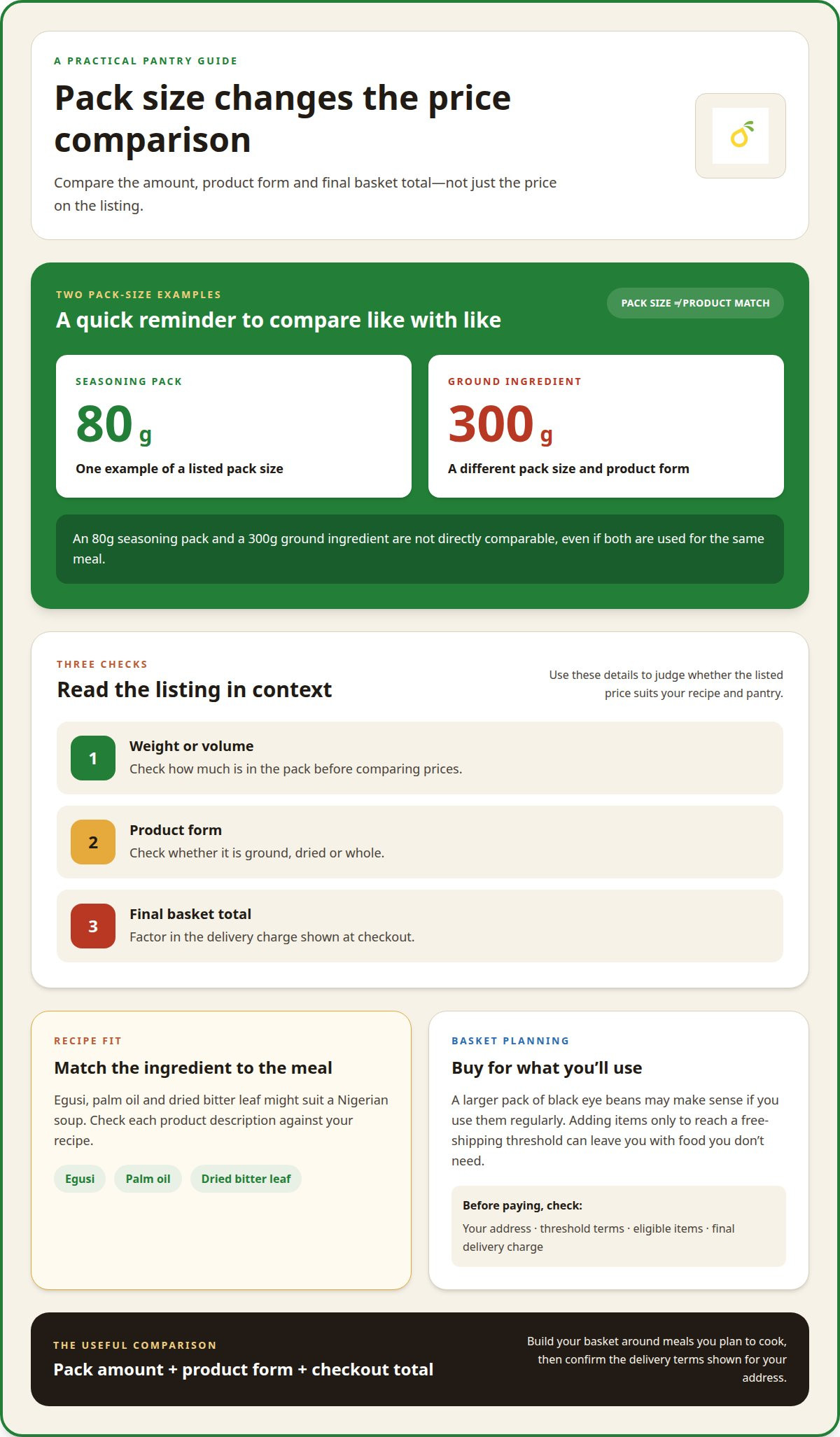
Pack size helps you judge whether a listed price suits your recipe and pantry. Compare like with like: note the weight or volume, product form and final basket total. An 80g seasoning pack is not directly comparable with a 300g ground ingredient, even if both serve the same meal.
Australian African grocery stores can vary in prices, product ranges and delivery options. Compare the same product name and pack size across listings, then factor in delivery charges at checkout. A broad range may make it easier to fill a pantry basket, while a focused range can help you find a particular ingredient.
Useful examples include New Age crayfish ground in an 80g pack, Praise Egusi Ground in a 300g pack and New Age locust beans (iru) in a 100g pack. Smoked Dried Fish is listed in a 200g pack, while dry cutlets fish, described as smoked catfish, comes in a 450g pack. Check the full product name and pack details before comparing listings.
For a larger staple, Taj Parboiled Basmati Rice is sold in a 5kg pack. Black eye beans come in a 1kg pack, while Praise Palm cream is listed in an 800g pack. These sizes help you plan quantities for regular cooking. They also make it easier to compare the amount you receive with the needs of a recipe.
Garri, cassava and pantry quantities
Garri and other cassava products come in different forms and pack sizes. Check each listing for the product form, weight and preparation details rather than treating every cassava item as interchangeable. If you’re buying garri for a particular dish, match the description to how you use it at home.
Boerewors and braai products
For boerewors and other braai products, compare the listed pack weight and whether the item is described as fresh, frozen or shelf-stable. These details affect meal planning and storage. Check the delivery information alongside the listing, especially when your basket includes products with different storage needs.
For a practical comparison, record each option’s product name, pack size and displayed price. Then add any delivery charge shown at checkout. This gives you a clearer view of the total cost for the quantities you need, without comparing a small pack with a bulk size.
Nigerian pantry staples
A Nigerian pantry often brings together seeds, leaves, beans, oils and dried fish, each with a different role in a meal. Online listings can help you find familiar staples, but names and forms matter. Compare the product description with your recipe before adding an item to your basket.
Egusi is a key example. Listings include Praise Egusi Ground and New Age Egusi Grinded (Nigerian), both in 300g packs. Ground egusi is ready to use in dishes such as egusi soup. Check the label wording to distinguish it from whole seeds or other ground ingredients. Pack size also helps you plan how much to buy.
Bitter leaf brings another familiar option. New Age bitter leaf is sold in a 35g pack. Dried leaves are compact, so read the product details and follow the preparation instructions on its packaging. The listing name can help distinguish bitter leaf from other dried greens. For a planned soup, match the ingredient to the recipe before choosing a pack.
Seasonings and oils round out the pantry. New Age crayfish ground comes in an 80g pack, while Praise Palm Oil zomi is listed in a 0.8Lt size. These ingredients are used differently: ground crayfish can season a dish, while palm oil contributes colour and flavour. Check the product form and volume rather than comparing unlike packs.
For deeper savoury flavour, look for New Age locust beans (iru) in a 100g pack. Smoked fish listings include 200g Smoked Dried Fish and 450g dry cutlets fish, described as smoked catfish. Compare the fish name, form and pack weight. That helps you choose an ingredient suited to the dish, whether you need a smaller amount or more for batch cooking.
Black eye beans and rice can anchor a meal beyond soups. Listings include black eye beans in a 1kg pack and Taj Parboiled Basmati Rice in a 5kg pack. Think about how often you cook each staple and how much storage space you have. A larger pack may suit regular use, while a smaller seasoning pack can keep less-used ingredients manageable.
- Match the ingredient name to your recipe, such as egusi, iru or bitter leaf.
- Check whether the listing says ground, dried, smoked or whole.
- Compare the pack weight or volume with your planned meals and pantry space.
These checks make it easier to build a Nigerian pantry around dishes you actually cook. Start with a familiar recipe, identify its ingredients, then compare the exact product forms and pack sizes available online.
Where can I buy African food online in Australia?
Start with an Australian specialist African grocery website when you need culturally specific ingredients. Search by the name used in your recipe, then compare product descriptions and pack details. Terms such as “nyimo”, “madora” or “Maputi” can help narrow the search to familiar foods. Enter your postcode early to see whether the shop delivers to your address.
Major marketplaces and supermarket websites can also be useful for packaged foods. Search using both the ingredient and an alternative name, such as bambara nuts for nyimo or mopane worms for madora. Check the seller, product description and pack details together. A photograph alone may not tell you whether an item is dried, seasoned or ready to eat.
Use a simple comparison before choosing where to place your order:
- Search for the exact ingredient and any familiar alternative name.
- Compare the product form and pack size shown in each listing.
- Enter your Australian postcode and review the delivery choices.
- Read the ingredients, allergen details and returns policy before paying.
Specialist grocers may make it easier to browse several African food categories in one place. A marketplace can bring together listings from different sellers, while a supermarket website may carry selected packaged goods. The best fit depends on what you need. If your list includes a Zimbabwean snack such as Maputi, search by that name rather than browsing broad “African food” categories.
For Nigerian cooking, search for the pantry item in your recipe, then compare the description with the form you use. Terms such as “egusi”, “iru” and “bitter leaf” are more precise than a general cuisine label. For unfamiliar foods, read the full listing and packaging information before buying. This helps distinguish a specific ingredient from a similar product or a different preparation.
Keep your order details together after checkout. Save the confirmation, delivery selection and product listing. If a parcel arrives with a different item, these details help you describe the issue under the retailer’s returns process. Check each store’s policy before ordering, as payment methods and return conditions vary.
For specialty foods that are hard to find through a general search, try a dedicated multicultural grocery service and browse by cuisine or ingredient. Compare the exact product, pack details and delivery option before ordering. This keeps your choice practical, whether you’re buying one unfamiliar snack or restocking several pantry essentials.
Gonje: Multicultural & Specialty Food Delivery
Gonje brings together multicultural and specialty food delivery, everyday groceries and ready-to-eat restaurant meals. It connects customers with diverse cuisines and specialty suppliers. Whether you’re planning meals around familiar Nigerian ingredients or exploring a different cuisine, Gonje offers a convenient way to browse food options alongside your regular grocery shop.
Choose multicultural food delivery when you want to explore beyond everyday staples. Choose ready-to-eat restaurant meals when you’d rather enjoy a prepared dish at home. Everyday grocery delivery can round out the rest of your shop. The right option depends on what you want for your kitchen and meal plans.
Visit Gonje to explore its food and grocery options.
Make your next meal plan a little more familiar
Start with a dish you enjoy, then make a short list of the ingredients that give it its familiar flavour. This keeps your next shop focused and gives you a useful way to compare product descriptions, pack sizes and delivery options. If you want to buy African food online in Australia, let the meals you plan to cook guide your basket.
Gonje offers Multicultural & Specialty Food Delivery and Ready to Eat Restaurant Meals Delivery for households exploring diverse food options. Its Software as a Service offering supports merchant operations, a separate option for food businesses rather than household grocery shopping.
Choose the next step that suits your kitchen, whether that means looking for specialty ingredients or a ready-to-eat meal. Contact Gonje about African groceries and keep building a pantry around the dishes that matter to you.
Frequently Asked Questions
Which Australian online African grocery stores deliver nationwide?
Delivery coverage depends on each store’s service area, so enter your postcode before choosing products. Some online shops deliver across Australia, while others serve defined areas. If you’re comparing stores, check your address first, then see which items can be delivered there. This avoids planning a basket around groceries unavailable at your location.
How much does African food cost at Australian online stores?
Prices vary by ingredient, brand and pack size, so compare the same product form and quantity. A small seasoning pack and a larger staple pack aren’t like-for-like. For example, compare the listed weight of ground crayfish with another ground crayfish product, rather than with rice. Include any delivery charge shown at checkout when calculating your total.
What are the delivery fees and shipping times for African groceries in Australia?
Delivery fees and timeframes vary between retailers and depend on the address, delivery option and basket. Review the delivery charge and estimated arrival information shown during checkout before paying. For Gonje grocery orders, delivery is within 24 hours, with same-day delivery where the vendor supports it. Delivery coverage depends on the vendor’s service area, which customers can check by entering their postcode.
Which online African food shops deliver to metro and regional areas?
Delivery to metro or regional addresses depends on each retailer’s service area. Enter your postcode on the store’s website to see whether it accepts orders there. For Gonje, availability depends on the vendor’s service area and appears after you enter your postcode. This is useful to check before browsing in detail, as product access and delivery options can vary by address.
What import and biosecurity rules apply to ordering African food in Australia?
Australian import and biosecurity requirements depend on the food, its ingredients, processing and country of origin. Check the exact product and where it will ship from. Foods containing seeds or animal products can have different considerations from sealed, processed pantry goods.
What payment, returns and refund options do Australian African food retailers offer?
Payment methods depend on the retailer and are shown at checkout. Customers have 30 calendar days from receiving an item to return it; shipping costs are non-refundable and may be deducted from a refund.


