

What makes a meal feel true to its roots when it arrives at your door? Finding authentic ethnic meals delivered can be tricky when a cuisine is unfamiliar, dish descriptions are vague and you’re not sure how the meal has been handled or how best to reheat it. A name alone doesn’t tell you what’s on the plate or whether it suits your tastes and table.
You don’t need to know every ingredient or tradition before trying something new. A little context can help you choose with more confidence while leaving room for discovery. This guide explains how to read dish descriptions, consider a meal’s culinary roots and weigh practical details such as freshness, handling and reheating.
You’ll also find a straightforward way to match a dish to your preferences and everyday needs, whether you’re ordering for yourself, family or work. Gonje connects Australians with ready-to-eat meals prepared by partner restaurants and culinary kitchens, so you can explore diverse cuisines without shopping for ingredients or cooking. Start with the food’s story, then choose what feels right for your table.
Key Takeaways
- Look for a dish’s name, cuisine or regional context, ingredients and preparation details to understand what you’re ordering.
- Think of authenticity as a connection to culinary traditions, not a score determined by one ingredient.
- Compare meal options by occasion, format and flavour, and distinguish ready-to-eat dishes from meals intended for later.
- Before ordering, review portion information, ingredients, dietary labels and any handling or reheating directions.
- Discover authentic ethnic meals delivered through Gonje, which connects customers with ready-to-eat meals prepared by partner restaurants and culinary kitchens.
Authentic ethnic meals delivered: why a meal can feel like more than dinner
A ready-to-eat meal can bring comfort at the end of a full day or introduce you to a flavour you haven’t tried before. Having dinner delivered means less time spent shopping, prepping and cooking. You can spend that time with the people around your table or simply take a breather.
The phrase authentic ethnic meals delivered can describe dishes connected to particular culinary traditions and food cultures. It doesn’t mean there’s one official version of every dish. Recipes vary between regions and households, and cooks draw on their own experience, ingredients and preparation methods.
A cuisine label is a starting point, not the whole story. A regional reference can add context, while a dish description may offer clues about ingredients or technique. Those details help you understand what you’re choosing without suggesting that one restaurant or recipe speaks for everyone.
A cuisine label names a broad tradition; cultural context helps explain the people, place and cooking knowledge behind a dish. That distinction makes discovery more useful and respectful. Follow your curiosity while recognising that food traditions are varied and living.
What makes a delivered meal feel connected to its culinary roots?
Start with the description. A clear dish name, ingredient details and an explanation of how it’s prepared give you more to work with than a broad cuisine label alone. If a listing mentions a region, treat it as helpful context, not proof that there’s one definitive recipe.
Meals reflect the choices of the people who make them. A cook’s training, family influences, restaurant kitchen and access to ingredients can all shape a dish. Look for descriptions that explain the food plainly and give the people and tradition behind it room to be more than a marketing phrase.
When does a ready-to-eat cultural meal suit the day?
It might be a weeknight when cooking feels like one task too many, a work lunch between meetings or a shared table where everyone is keen to try something different. Ready-to-eat restaurant meals make room for variety without requiring you to shop for unfamiliar ingredients or learn a new preparation method first.
Cooking from scratch can be rewarding, but it takes time to plan, shop and prepare. A prepared meal offers a different kind of ease: choose what suits the occasion, then follow the meal’s handling and reheating directions. Consider who’s eating, how much time you have and what would make the meal feel right today.
How to read cuisine and dish descriptions with cultural care
A menu description is a useful starting point, not a complete account of a cuisine. When looking for authentic ethnic meals delivered, choose listings with information that helps you understand the dish without treating one recipe, ingredient or label as the final word on a food tradition.
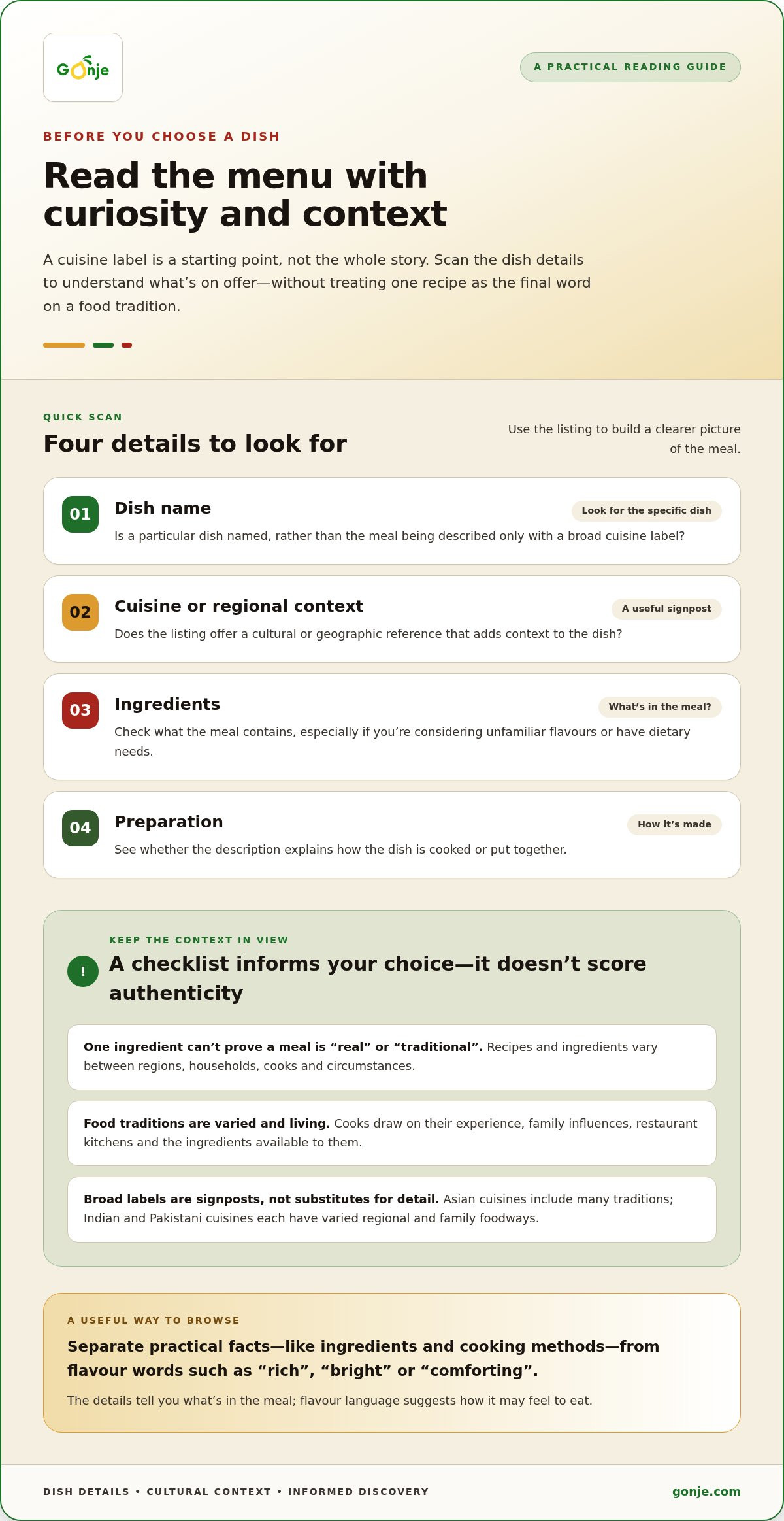
Use this quick checklist as you browse:
- Dish name: Is a specific dish named, rather than described only by a broad cuisine label?
- Cuisine or regional context: Does the listing offer a useful cultural or geographic reference?
- Ingredients: Can you see what the meal contains, especially if you’re considering unfamiliar flavours or have dietary needs?
- Preparation: Does the description explain how the dish is cooked or put together?
These details help you make an informed choice, but they don’t let you award a dish an authenticity score. A single ingredient can’t prove whether a meal is “real” or “traditional”. Ingredients and recipes vary with region, household, cook and circumstance. Traditions also change as people carry them into new kitchens and adapt to the ingredients around them.
Broad labels can make browsing easier, but they shouldn’t flatten distinct food cultures into one category. Asian cuisine covers many different traditions. Indian cuisine and Pakistani cuisine have their own varied regional and family foodways; neither should stand in for the other. Treat each label as a signpost, then read the dish details for a clearer sense of what’s being offered.
Which details help explain a dish before you order?
Notice the named dish, key ingredients and stated preparation method. If a menu uses an unfamiliar term, a short explanation can help you understand its role without turning the description into a glossary. Separate practical facts, such as listed ingredients or cooking methods, from flavour language like “rich”, “bright” or “comforting”. The first tells you what’s in the meal; the second suggests how it may feel to eat.
How can you explore unfamiliar cuisines respectfully?
Approach a dish as an invitation, not a test of what you know. You don’t need to recognise every term before ordering. Read the description with curiosity, allow for variation between cooks and households, and avoid expecting one meal to represent an entire culture. That makes discovery more enjoyable and keeps the people and knowledge behind the food in view.
Context turns a cuisine label into a more useful description by showing what the dish is and how it fits within a broader food tradition. Keep that in mind as you compare meals. Gonje connects customers with dishes prepared by partner restaurants and culinary kitchens. Explore restaurant meals to see what’s on offer.
Compare delivered meal options by flavour, format and occasion
The right meal depends on more than its cuisine label. Think about when you’ll eat, whether you’re ordering for yourself or sharing, and what kind of flavour sounds good today. Then compare the details in each listing. Cuisine examples can spark curiosity, but check the specific meal description to understand what’s being offered.
Use this guide to weigh up options. Treat format and storage as details to verify in the listing, not assumptions.
| Occasion | Meal format | Flavour profile to consider | Useful menu details |
|---|---|---|---|
| Lunch break | A single ready-to-eat meal, if described that way | Familiar or mild flavours may suit a quick, easy lunch; a tangy or spice-forward profile might be just the change you want. | Check portion information, ingredients and whether the meal is ready to eat or needs reheating. |
| Family dinner | A meal or combination intended for sharing, where the listing says so | Consider the different preferences at your table, rather than assuming everyone wants the same level of spice. | Look for serving details, listed components and dietary information for each item. |
| Planned meal for later | An option described as suitable for later, chilled or frozen | Choose by the flavours you enjoy, then check how the meal should be stored and prepared. | Use the listing and packaging directions for storage, timing and reheating. Don’t infer these from the cuisine or dish name. |
These are prompts for comparing listings, not fixed rules. A cuisine you’re curious about, such as one from South Asia or another part of the world, can be a starting point for exploring flavour descriptions. Focus on the words used for the particular meal rather than expecting every dish in a cuisine to taste alike.
Which meal format fits your routine?
A single ready-to-eat meal may suit a short lunch break or a night when you want dinner without cooking. For a family dinner or shared table, look for listings that clearly describe portions or items intended to be shared. If you’re planning ahead, choose a meal described as suitable for later. Storage and reheating directions vary by meal and packaging, so follow the details provided.
How do flavour and dietary preferences guide the choice?
Start with the flavour words that appeal to you: familiar, mild, rich, tangy or spice-forward. Preferences differ from person to person, and a cuisine name alone won’t tell you how hot or rich a specific dish will be. Check listed ingredients and dietary labels for practical details. Don’t assume a dish contains or avoids an ingredient based only on its name or cultural origin.
Comparing authentic ethnic meals delivered this way helps you balance curiosity with the needs of the day. Choose the occasion first, then match the meal format and stated details to your table.
A practical checklist for choosing and ordering a delivered meal
A little structure can make browsing easier, especially when you’re choosing for more than one person. Take the decision in order: start with the occasion, narrow down the options, read the meal details, then review your order before completing it. This helps you choose for the day you’re having, not just for a dish name that catches your eye.
- Choose the occasion. Is this a quick lunch, dinner for yourself or a shared meal? Think about when you’ll eat and how much time you’ll have.
- Browse with a starting point. Try a cuisine, a dish name or a flavour you enjoy. If you’re also exploring specialty ingredients for your pantry, the speciality food delivery buying guide offers related context.
- Compare the listing details. Read the dish description, portion information, ingredients and any dietary labels. Look for stated serving, storage or reheating directions.
- Review the order. Check that you’ve selected the meals and quantities you intended. Read the delivery details and meal information shown on the selected listing so you know what to expect.
What should you check on a meal listing?
Give the practical details a careful read. A dish name and description help you understand what’s being offered; ingredients and portion information help you judge whether it suits the people eating. Dietary labels can guide your choice, but don’t infer allergen status or suitability from a dish name alone. Follow any storage, reheating or serving directions provided for that meal.
How can you make ordering fit the household?
Match the quantity and format to the occasion and the people at the table. For a low-pressure introduction to an unfamiliar cuisine, pair a familiar favourite with one new dish. That gives everyone a comfortable option and something different to try. Gonje connects customers with meals prepared by partner restaurants and culinary kitchens, so you can choose an option that fits your plans.
Before you place the order, pause over the details that matter most to your household. One person may be looking for a mild flavour, while another wants to try something more spice-forward. Clear ingredients, dietary information and portion details can help you make a considered choice without guessing from broad cuisine labels.
Put the checklist into practice with partner restaurant meals on Gonje.
Discover authentic ethnic meals delivered through Gonje
Gonje connects customers across Australia with ready-to-eat meals prepared by partner restaurants and culinary kitchens. It brings different food businesses and their cooking together in one place, making it easier to discover meals beyond your usual rotation. The people preparing the food remain central: you’re choosing a restaurant meal, not an anonymous dish assigned to a broad cuisine label.
Think of Gonje as a practical way to make cultural variety part of an ordinary lunch or dinner. Browse restaurant meal listings, read the descriptions, compare the details that matter to you, then choose a meal for home or work. You don’t need to know every dish or culinary tradition before you start. Follow your appetite and use the information provided to decide what suits the day.
How Gonje connects diners with diverse restaurant meals
Start with the meal you need, then explore partner restaurant options and their descriptions. Each listing connects you with food prepared by a restaurant or culinary kitchen, so there’s a business and cooks behind the meal. Read the available details, make your selection and place your order through Gonje. If you’re looking for ingredients to cook at home instead, Gonje also offers multicultural and specialty food delivery for pantry staples and ingredients.
The marketplace brings together different cuisines and food suppliers without asking one menu to represent them all. When exploring authentic ethnic meals delivered, a clear description helps you choose a particular restaurant meal, while the range of food businesses creates opportunities to discover something new over time. Each meal stands on its own, shaped by the kitchen that prepares it.
Turn discovery into an easy next meal
Keep the choice grounded in your plans. Is this for a quick lunch, a quiet dinner or a table shared with others? Consider the flavour details and ingredients that matter to you, then choose a listing that fits. You might pair a familiar preference with an unfamiliar dish or stick with something you already know you enjoy. There’s no test to pass and no need to explore everything at once.
A good next meal doesn’t need a special occasion. It can be a straightforward way to bring a different cuisine into a busy day, with the restaurant kitchen doing the preparation. Check the listing details, choose what suits your table and let curiosity guide the rest.
Let your next meal open a new door
A meal can be a small beginning. One new flavour might spark a conversation, bring back a memory or lead you to a food tradition you’d like to learn more about. There’s no need to make every choice a grand discovery. Let curiosity grow at its own pace, and leave room for the cooks and cultures behind each dish to speak for themselves.
Choosing authentic ethnic meals delivered can be part of a more thoughtful everyday routine, not just a special occasion. Notice what you enjoy, stay open to flavours outside your usual habits and let each meal shape what you might try next. Your tastes are personal, and they can change as you discover more.
Pick a dish that feels right for today’s table, whether it’s familiar or something new. Explore authentic meals on Gonje, and enjoy finding a new favourite one meal at a time.
Frequently Asked Questions
Can I order authentic ethnic meals delivered for lunch as well as dinner?
Yes, ready-to-eat restaurant meals can suit lunch or dinner, depending on the dish and its serving details. For a workday lunch, consider how much time you have to eat and whether the listed portion suits your appetite. Check the meal information for serving guidance. A dish described as dinner can still work at lunchtime if it fits your schedule and preferences.
Are delivered ethnic meals fresh or frozen?
Handling varies by food business and meal, so don’t assume every delivered dish is fresh, frozen or stored the same way. Gonje connects customers with ready-to-eat meals from partner restaurants and culinary kitchens. Check the chosen meal’s listing and any directions supplied with it. Follow its specific storage and reheating guidance rather than applying instructions from another dish to your order.
How can I tell whether a meal is suitable for my dietary needs?
Use the ingredients and dietary information stated for that meal as your starting point. A cuisine label or familiar dish name can’t establish whether food suits an allergy, intolerance or dietary preference. Read any preparation or handling notes too. If a requirement is critical, don’t rely on a guess or an omitted detail; choose based on clear information provided for the meal.
What should I look for when ordering a dish from an unfamiliar cuisine?
Look for the dish name, ingredients and any notes about preparation or regional context. These details give you a better idea of what you’re ordering than a broad cuisine label alone. Flavour descriptions can help you decide whether a meal sounds appealing, too. You don’t need specialist knowledge to try something new. Stay curious, and remember that dishes vary between cooks and households.
Can I order meals for more than one person?
Yes. Choose quantities and meal formats with the people eating and the occasion in mind. Check the listing for portion details or serving suggestions, and don’t assume a single ready-to-eat meal is intended for sharing. If tastes differ around the table, a familiar choice alongside a new flavour can make it easier for everyone to find something they’ll enjoy.
How should I store and reheat delivered meals?
Follow the storage and reheating directions on the meal listing or supplied with the order. Instructions can differ according to the dish, packaging and how it was prepared, so avoid using one meal’s directions for another. Check the guidance before storing or heating the food, and observe any stated timeframe. Appearance alone isn’t a reliable way to decide how a meal should be handled.
Does authentic ethnic food mean one fixed recipe?
No. Food traditions include regional, family and individual variations, and a dish’s name may describe different preparations. Cooks make choices shaped by their knowledge, ingredients and kitchen practices. Treat a listing as a description of the meal on offer, not a standard that every version must match. Cultural context gives you a more respectful way to understand a dish than a pass-or-fail judgement of authenticity.


