

What if the right ingredient matters more than the recipe? A dish can hinge on a particular kind of produce, yet finding culturally familiar options through everyday grocery shopping can take time. Specialty produce home delivery offers another way to find hard-to-find international foods and regional ingredients. Knowing what you’re ordering and how you’ll use it can help you choose with confidence.
You want produce that suits the dishes you cook, arrives in a condition you can use and fits your household’s tastes. This guide explains how to assess product descriptions, cultural fit, delivery details and value, so you can make a considered choice instead of guessing from an unfamiliar name or vague listing.
We’ll cover how to match an ingredient to a dish, which listing details are useful and what to consider when planning and receiving an order. Gonje connects Australian shoppers with local specialty food suppliers through a delivery marketplace, bringing culturally relevant ingredients closer to everyday kitchen routines.
Key Takeaways
- Understand how specialty produce differs from organic, seasonal or premium food labels, and choose according to culinary tradition and intended use.
- Use product names, photographs, origin details and storage guidance to assess whether an online listing gives you enough information.
- Compare individual items, curated assortments and broader marketplaces to find a specialty produce home delivery option that suits how you shop and cook.
- Plan meals, review delivery information and put produce away promptly when your order arrives.
- Discover how Gonje connects Australian shoppers with local suppliers offering hard-to-find international foods and regional ingredients.
What counts as specialty produce for home delivery?
Specialty produce is valued for a distinct variety, place of origin or role in a food tradition. It might be a leafy green used in a familiar family dish, an herb chosen for its particular flavour or fruit sought for a specific recipe. Its defining feature is how people grow, cook and eat it, not a claim that it is automatically better.
Specialty produce home delivery means ordering produce valued for its variety, origin or culinary tradition and having it brought to your home. The wider term “specialty food” can cover distinctive foods made in smaller quantities from quality ingredients. For more context, see What is specialty food? Produce is one part of that broader category.
How is specialty produce different from everyday grocery produce?
The difference often comes down to what an ingredient is used for and how easy it is to find during a routine shop. A regional green, a particular herb or fruit used in a traditional dish may be familiar to one household and unfamiliar to another. Start with the recipe or food tradition: search by the ingredient’s name, a common spelling or the dish it helps make.
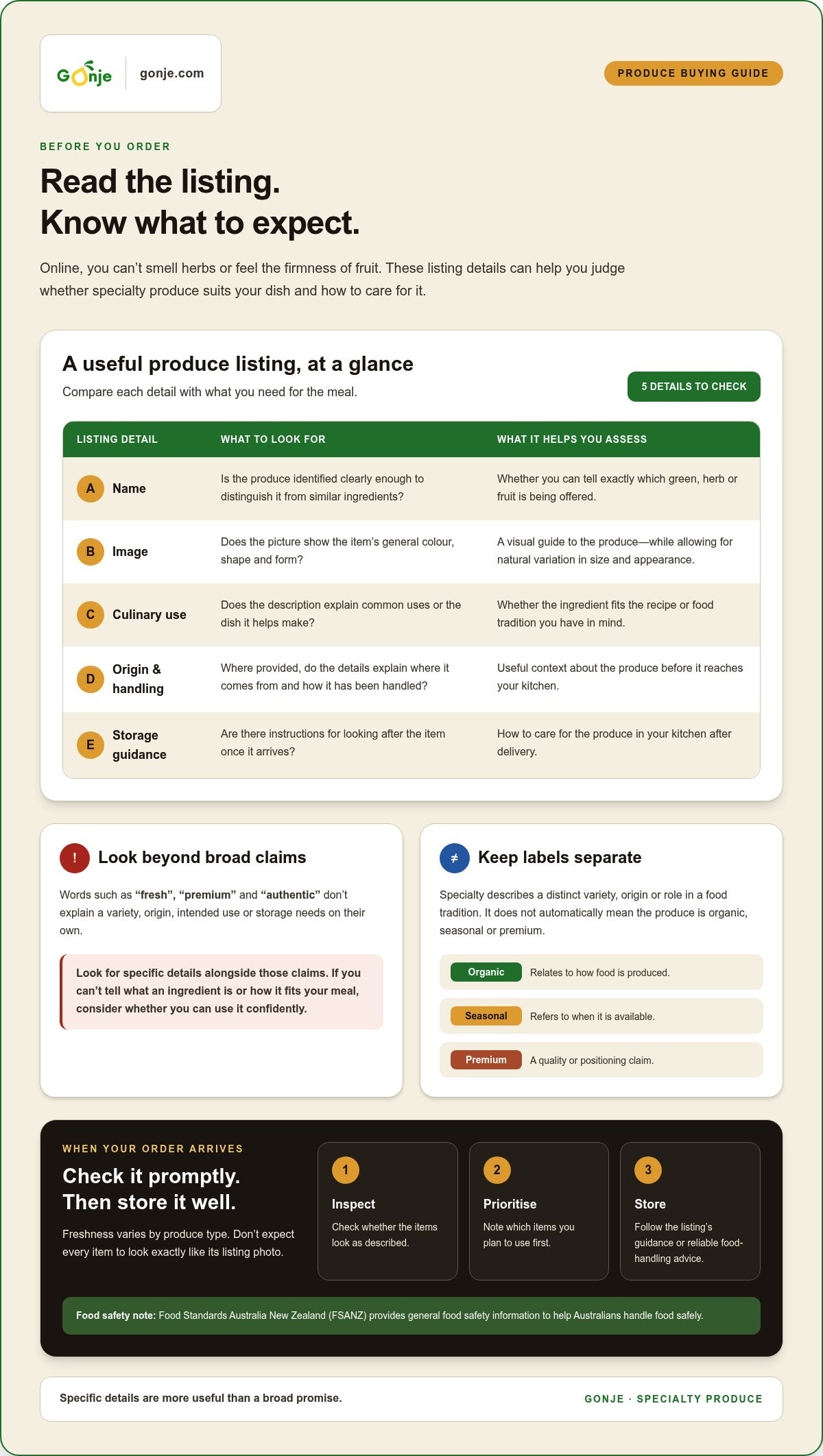
Specialty doesn’t automatically mean organic, seasonal, locally grown or premium. These are separate descriptions. “Organic” relates to how food is produced, while “seasonal” refers to when it is available. “Premium” is a quality or positioning claim. Read each label on its own rather than assuming one tells you the others.
Who benefits from specialty produce delivery?
Delivery can help households find ingredients for cultural dishes that aren’t part of a standard weekly shop. It can also suit curious cooks keen to try an unfamiliar ingredient, or shoppers looking for a particular type of produce for a planned meal.
Having an order brought to your door can save a separate trip and fit more easily around work, family and cooking routines. It doesn’t need to replace every grocery shop. Use it to find the ingredients that make a particular meal possible, then plan the rest of your shop around them.
How to assess freshness and quality before ordering specialty produce
You can’t smell herbs or feel the firmness of fruit through a screen. A clear listing can still help you decide whether an item suits your recipe and understand what to expect before it arrives.
A useful produce listing names the item clearly and gives shoppers a representative image, culinary context, origin or handling details where available, and practical storage guidance. Treat these details as clues, not a promise that every piece will look identical.
Which details in a produce listing help you judge quality?
Read the full description, not just the headline. An unfamiliar name may have alternate spellings or refer to a particular type of green, herb or fruit. Information about common culinary uses helps you judge whether it suits the dish you have in mind. Photos can show the general colour, shape and form, but produce naturally varies in size and appearance.
- Name: Is the produce identified clearly enough to distinguish it from similar ingredients?
- Image: Does the picture help you understand the item, while leaving room for natural variation?
- Origin and handling: Where provided, do these details explain where the produce comes from and how it has been handled?
- Storage guidance: Are there instructions to help you care for the item once it reaches your kitchen?
Separate useful facts from broad selling words. “Fresh”, “premium” and “authentic” don’t explain a variety, origin, intended use or storage needs on their own. Look for specific details alongside those claims. If you can’t tell what an ingredient is or how it might fit your meal, consider whether you can use it confidently before adding it to your order.
How should you think about freshness and handling?
Freshness doesn’t look the same across every type of produce. Leafy greens may feel different from firm vegetables or fruit, and maturity can affect colour and texture. Don’t rely on appearance alone, or assume every item should look exactly like its listing photo.
Inspect your order promptly when it arrives. Check whether the items look as described and note which ones you plan to use first. Put produce away according to the listing’s storage guidance or reliable food-handling advice. Food Standards Australia New Zealand (FSANZ) provides general food safety information to help Australians handle food safely.
These checks make specialty produce home delivery easier to plan around your cooking. To explore specialty foods and suppliers connected through Gonje, browse specialty food delivery.
How to compare specialty produce delivery for your cooking
The right ordering format depends on the meal you want to make, how much choice you need and how you prefer to shop. Online ordering means you can’t inspect produce before it arrives, so compare the detail in each listing, the range available and the delivery information shown before you order. For a broader look at choosing a service, read this specialty food delivery Australia buying guide.
Which ordering format suits your household?
Start with what you’re cooking and how much flexibility you want. Each format offers a different way to shop. Compare what is included and how clearly the items are described.
| Format | May suit you if… | What to compare |
|---|---|---|
| Individual items | You’re following a specific recipe or only need a small number of ingredients. | Names, descriptions, quantities and how each item fits the dish. |
| Curated assortment | You’d like variety or want ideas for meals beyond your usual routine. | What the assortment includes, how clearly items are described and whether you can use them. |
| Broader specialty-food marketplace | You want to explore food from a wider group of specialty suppliers in one place. | Supplier range, product detail, ordering steps and delivery information. |
A marketplace can bring together different local specialty food suppliers, making it easier to explore hard-to-find international foods and regional ingredients. Gonje connects shoppers with these suppliers through a delivery marketplace. Compare product listings and ordering details with your meal plan rather than assuming every marketplace offers the same range.
How do you match produce to a meal or tradition?
Start with the dish. Which flavour, texture or cooking role are you looking for? Then use the ingredient name and description to judge whether the listed item fits. A cuisine label can point you in the right direction, but may not identify the variety or form needed for a particular recipe.
If you’re cooking from memory, a family recipe or a trusted source, note the ingredient’s name and how it’s used before searching. If pantry ingredients complete the meal, this traditional pantry staples delivery guide can help you plan the rest of your order.
When choosing specialty produce home delivery, weigh range and convenience alongside practical fit. Can you identify the item, understand how it relates to your cooking and review the delivery information before ordering? These checks help turn online discovery into a more considered shop.
How to plan, receive and store a specialty produce order
A little planning helps an online produce order fit the meals you have in mind. Use this routine to move from recipe to kitchen bench without making assumptions about delivery times, packaging or how long an item will keep.
- Choose one or two dishes. Start with meals you’re likely to cook soon, such as a familiar family recipe or a dish you’re keen to try. Note the specialty produce each one needs.
- Build a practical list. Check each produce name and description against your recipe. Consider whether you need a particular form or quantity, then add the pantry ingredients that will complete the meal. This pantry staples delivery guide can help you plan those supporting ingredients.
- Review the order before placing it. Read item descriptions and quantities carefully. Check the delivery information shown during ordering, including any instructions for receiving the order. Choose a time when someone can receive it, based on the options presented.
- Inspect the produce promptly. When it arrives, compare each item with its description. Check that you can identify what you ordered and note its condition. Differences in size, shape and colour don’t necessarily mean an item is unsuitable, so consider the type of produce and how you plan to use it.
- Put each item away thoughtfully. Storage needs differ across leafy produce, firm vegetables and fruit. Organise items according to their needs and follow any item-specific storage or handling guidance provided. If you’re unsure, use reliable food-handling advice rather than guessing.
- Set a cooking order. Use delicate ingredients earlier when their condition and intended use make that sensible. Keep the rest organised around your planned meals, so unfamiliar produce doesn’t get forgotten at the back of the fridge or pantry.
This routine makes specialty produce home delivery easier to work into your week. It helps you notice mismatches early and decide how each ingredient fits into your cooking, without assuming every type of produce should be stored or used in the same way.
To plan your next meal around specialty ingredients, explore specialty food delivery through Gonje and discover food from local suppliers.
Discover specialty produce through Gonje home delivery
Finding an ingredient for a familiar dish shouldn’t mean searching at every shop. Gonje connects Australian shoppers with local specialty food suppliers through an online delivery marketplace. Discover hard-to-find international foods and regional ingredients, then fit them into the meals you already cook or want to explore.
When ordering specialty produce, start with the dish, read product details closely and consider how you’ll use the ingredient once it reaches your kitchen. A marketplace brings supplier discovery and online ordering together, helping you look beyond the everyday grocery range while keeping your meal plans and household tastes at the centre.
How does Gonje help shoppers find specialty food?
Food traditions live in everyday kitchens. A particular ingredient can bring a family recipe closer to the way it’s remembered, or give a new dish the flavour and texture you’re looking for. Gonje helps shoppers discover specialty foods from local suppliers, including ingredients that may be harder to find through routine grocery shopping.
Browse with a meal in mind. Search for an ingredient you know, or read descriptions to see how unfamiliar foods might fit into your cooking. Product details help you assess whether an item suits your recipe, while delivery information helps you plan around your routine. Having specialty food delivered to your door can save a separate trip and make discovery part of the usual shop.
What is the next step for a first order?
Keep it simple. Choose a dish, note the ingredients you need, then browse Gonje for specialty foods that match your plan. Read the listing details and delivery information as you shop. If you’re trying something unfamiliar, decide how you’ll use it before adding it to your order.
This approach brings the key checks together: cultural fit, useful product information, a clear purpose in your kitchen and delivery that works with your plans. It turns browsing into a more considered way to shop, whether you’re returning to a familiar food tradition or making room for a new ingredient at the table.
Explore specialty food delivery with Gonje
Bring the right ingredients into your kitchen
A good specialty produce order starts with the dish you want to make. Look beyond broad labels: check the ingredient name, description, origin details and storage guidance, then review delivery information and plan how you’ll use what arrives. These checks help you choose food that fits your cooking and household tastes.
Specialty produce home delivery can make culturally familiar ingredients easier to find without adding another stop to your shopping routine. Gonje connects Australian consumers with local specialty food suppliers and supports delivery of hard-to-find international foods and regional ingredients across Australia.
Whether you’re cooking a treasured family recipe or making room for something new, choose ingredients with care and let your meal plan lead. Explore specialty food delivery with Gonje and bring a little more discovery to your kitchen.
Frequently Asked Questions
What is specialty produce?
Specialty produce is food valued for a distinct variety, origin or place in a culinary tradition. It might be a particular type of green for a family recipe, an herb used in a regional dish or fruit sought for a specific flavour or texture. The term describes why an ingredient matters to cooking or culture. It doesn’t automatically mean the produce is organic, locally grown or more nutritious.
Can I get specialty produce delivered to my home in Australia?
Yes. Specialty food delivery can bring hard-to-find international foods and regional ingredients to Australian homes. Gonje connects shoppers with local specialty food suppliers through a delivery marketplace operating nationally across Australia. Browse for ingredients that suit your planned meals, then review the listing and delivery information as you order. Use the details provided to guide your choices.
How do I know if specialty produce will be fresh when it arrives?
You can’t confirm the condition of produce before an online order arrives, but a detailed listing can help set expectations. Look for a clear produce name, a useful photograph and any origin, handling or storage information provided. After delivery, inspect the items promptly and consider their type and intended use. Produce naturally varies in size, colour and maturity, so appearance alone doesn’t tell the whole story.
Is specialty produce the same as organic produce?
No. Specialty describes produce valued for its variety, origin or culinary tradition. Organic refers to how food is produced, so the terms aren’t interchangeable. Specialty produce may be organic or non-organic, and the word “specialty” alone doesn’t tell you whether it is locally grown, seasonal or premium. Read each product description and any specific claims separately to understand what’s being offered.
What should I check before ordering specialty produce online?
Start with your recipe and check that the listing names an ingredient you can identify. Read the description for culinary use, and treat the photograph as a guide rather than an exact promise of appearance. Review any origin, quantity, handling or storage details provided, then read the delivery information during ordering. These checks make specialty produce home delivery easier to plan around your cooking and household needs.
How should I store specialty produce after delivery?
Storage depends on the type of produce, so follow any item-specific guidance provided with the listing or order. When your delivery arrives, inspect the items and put them away promptly according to their needs. Keep different types organised rather than assuming all produce belongs in the same place. If you’re unsure how to store an unfamiliar ingredient, use reliable food-handling guidance instead of guessing.
Can specialty produce delivery help with cultural cooking?
Yes. Delivery can make it easier to find ingredients used in cultural dishes or family recipes, especially when they’re not part of an everyday shop. Gonje connects Australian shoppers with local specialty food suppliers offering hard-to-find international foods and regional ingredients. Start with the dish you want to cook, then use ingredient names and product descriptions to find food that fits your plans and tastes.


