

The most convenient delivery option isn’t always the one that puts dinner on the table. If your household also needs familiar pantry staples or hard-to-find cultural ingredients, a ready-made meal service may only solve part of the problem. Choosing multicultural meal delivery australia households can use comes down to matching the format to the occasion, food traditions and weekly routine.
Prepared meals, restaurant dishes and grocery delivery each serve a different need. This guide compares the options and explains what to look for in menu and product details, ordering steps and delivery information, so you can choose with clearer expectations.
Gonje brings multicultural specialty foods, everyday groceries and ready-to-eat restaurant meals together in one online platform, connecting customers across Australia with local suppliers and partner restaurants. The range can suit different plans, from ordering a quick dinner to restocking the pantry or finding ingredients to cook with at home.
Key Takeaways
- Compare ready-to-eat meals, restaurant dishes and specialty groceries by cooking effort and occasion.
- Use a simple checklist to assess food range, product details, ordering and delivery information.
- Choose multicultural meal delivery australia options around your household routine, whether you need a quick dinner or ingredients to cook from scratch.
- Match the format to the meal: a shared table, a pantry restock and a weeknight dinner can call for different orders.
- Gonje brings restaurant meals, multicultural specialty foods and everyday groceries together through one delivery platform.
What multicultural meal delivery in Australia can include
Multicultural meal delivery gives households a way to order culturally varied prepared meals and specialty foods for home, without needing to find every item in person. The term covers several formats. Some services focus on ready-to-eat dishes; others deliver ingredients and pantry staples. Some platforms bring meals and groceries together.
That distinction matters when one person wants a familiar dinner tonight while someone else needs ingredients for a dish they prefer to cook themselves. Convenience doesn’t have to mean choosing between a cooked meal and the foods that make the pantry feel like home.
Food traditions contribute to Australia’s varied food culture. The overview of Australian cuisine describes how different influences have shaped what people cook and eat. A delivery option that reflects this variety can help households find both restaurant meals and culturally familiar groceries. Gonje connects customers across Australia with local suppliers and partner restaurants, bringing specialty foods, everyday groceries and ready-to-eat meals into one platform.
How meal delivery differs from specialty food and grocery delivery
Restaurant-prepared meals arrive ready to eat or reheat, which suits evenings when you want dinner without starting from scratch. Grocery orders serve a different purpose: they can include packaged ingredients, sauces, snacks or pantry staples for cooking at home. Choose based on what you need the order to do.
Think of it as dinner tonight versus cooking later in the week. A prepared dish can help with the first; ingredients and staples can support the second. A platform with several food categories can make it easier to plan for both through one ordering experience.
Why cultural familiarity matters when ordering food
Familiar recipes and ingredients can bring comfort, routine and family connection. Food choices are personal, and no cuisine or community should be reduced to a handful of popular dishes. A household might be looking for everyday staples, a particular ingredient or a ready-made meal for a shared table.
Clear item descriptions help you decide what suits your kitchen. Look for details such as ingredients, pack size and preparation guidance, particularly when a product is unfamiliar or needs to fit a particular meal. For multicultural meal delivery australia households, useful information helps connect convenience with considered food choices.
How to compare multicultural meal delivery services
A useful comparison starts with your household, not a star rating. For multicultural meal delivery australia shoppers, the best fit depends on what’s for dinner, how much cooking you want to do and which ingredients or dishes matter to your household.
A meal menu offers prepared dishes; a specialty grocery selection gives you ingredients and pantry staples to use your own way. Some delivery platforms bring both together. The broader food culture reflected in Modern Australian food also shows why a household’s preferences may draw on more than one culinary tradition.
- Food range: Look for the cuisines, dishes and grocery categories relevant to your household. Don’t assume every service covers the same needs.
- Format: Decide whether you want a ready-to-eat meal, a restaurant dish or groceries for home cooking.
- Product detail: Review item descriptions and any ingredient, serving or preparation information shown.
- Ordering and delivery: Check the ordering steps and read the delivery information provided for your address.
What to look for in menu and product information
Descriptions help you understand what you’re ordering before it reaches your kitchen. For prepared dishes, check the ingredients and serving details provided. For groceries, review the product description and pack information. If you’re choosing around a dietary need or preference, use the details shown for that item rather than assuming it meets a particular standard.
Useful information makes it easier to plan a meal, compare similar items and decide whether something suits the people sharing the table. Familiar names can help, but clear details matter too.
How delivery and ordering fit everyday routines
A one-off dinner order can suit a busy evening or a shared meal that needs little preparation. A grocery order works better when you’re planning to cook at home and want ingredients or pantry staples on hand. If you use both formats, a platform with restaurant meals and grocery categories brings those choices into one ordering experience.
Before placing an order, review the delivery details shown for your address and the steps for completing your order. That way, you can choose an option that fits your plans without relying on a general delivery estimate.
To compare these categories in one place, explore multicultural food options with Gonje, including restaurant meals, specialty foods and everyday groceries.
Multicultural meal delivery options compared: prepared meals, restaurant dishes and groceries
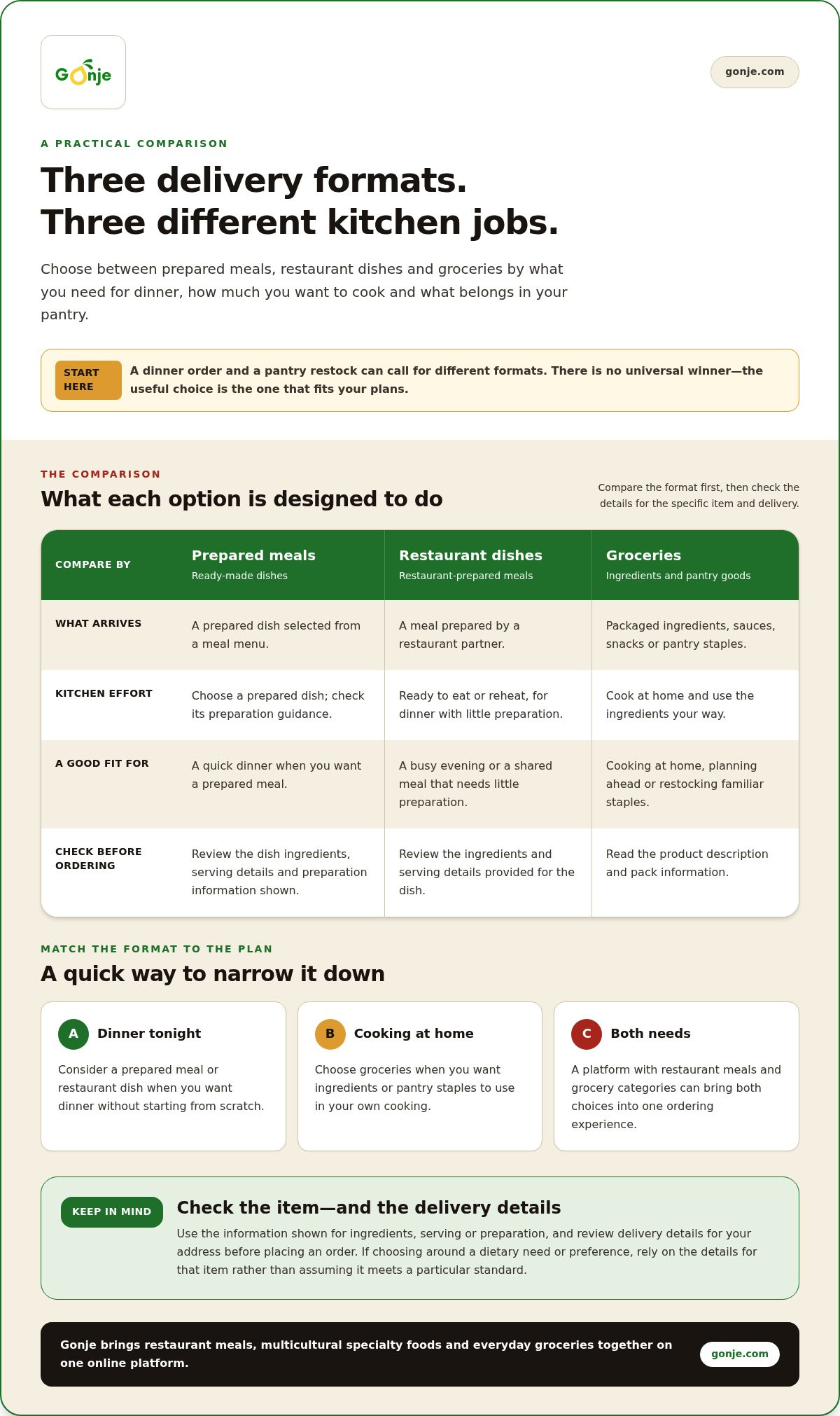
These formats solve different kitchen needs. A restaurant meal suits dinner without cooking; a grocery order gives you ingredients to prepare a dish at home. Australia’s multicultural food scene spans varied traditions and tastes, so the useful choice is the one that fits your plans, not a universal winner.
The table compares the main formats by occasion, effort and typical contents. Use it as a starting point, then review the item and delivery details for your order.
| Format | Best-fit occasion | Cooking effort | Typical order contents |
|---|---|---|---|
| Ready-to-eat restaurant meals | Dinner tonight or a shared meal | Low; the food is prepared for the meal | Restaurant-prepared dishes |
| Prepared meal services | Planning meals ahead or keeping prepared options on hand | Low; usually needs reheating or serving | Prepared meals selected from a service’s menu |
| Specialty groceries | Pantry restocking or cooking at home | Higher; you prepare the meal | Packaged ingredients and pantry staples |
Gonje spans these different food needs. It connects customers with partner restaurants and local suppliers, bringing ready-to-eat restaurant meals, multicultural specialty foods and everyday groceries together through one platform. That can be practical for households balancing a quick meal with ingredients for a dish they’ll cook themselves.
Ready-to-eat restaurant meals and prepared meals
A restaurant meal is prepared by a partner restaurant and ordered as a dish for an upcoming meal. Prepared-meal services instead centre on a menu of meals selected in advance and reheated or served later. Mealcare is one example of a service focused on prepared meals. Both formats reduce cooking, but their ordering and meal-planning roles differ.
For a restaurant dinner, check the dish description and serving details before choosing. For prepared meals, consider how the menu fits your household’s routine and which meals you want ready to serve.
Specialty groceries for cooking at home
Specialty ingredients and pantry staples support familiar home-cooked dishes, whether you’re planning a weekend meal or keeping everyday essentials in the cupboard. Unlike an evening meal order, groceries are ingredients to use over time, often alongside items already at home. For more on this format, read the Australian ethnic grocery delivery guide.
How to choose a multicultural food delivery option for your household
Start with the meal you need, then choose the format that fits your time, cooking plans and household preferences. This simple decision path can help make multicultural meal delivery australia work for everyday routines, not just special occasions.
- Choose the occasion. Is this a quick dinner, a shared meal, a pantry restock or a meal you want to cook from scratch?
- Select a format. Choose a ready-to-eat restaurant meal for less preparation, or specialty groceries if you want to cook at home. If your plans call for both, consider ordering from meal and grocery categories.
- Review item details. Read the description and any ingredient or serving information shown. Use those details to assess whether an item suits your household’s preferences and needs.
- Check the order before placing it. Review the items in your basket and the delivery information shown for your address before checkout.
There’s no need to choose convenience at the expense of familiar flavours. The best fit makes room for the dishes and ingredients your household values while matching the amount of cooking you want to do.
Match the order to the occasion
Short on time after a busy day? A ready-to-eat meal can take cooking off the evening’s list. Planning a weekend dish or topping up the pantry? Specialty groceries give you ingredients to prepare food your own way. Some households need both: a prepared meal for tonight and groceries for a meal later in the week.
For more help comparing food categories, see the specialty food delivery Australia buying guide. It can help you decide what you’re looking for before building an order around your plans.
Review details before placing an order
Take a moment to read each listing. Check the item description and ingredient details provided on the ordering page, especially if you’re choosing around a household preference or dietary need. Don’t assume an item meets a particular requirement unless its details say so.
Then review the order and delivery information shown before checkout. Gonje brings restaurant meals, specialty foods and everyday groceries together through one platform. Explore multicultural food and grocery options to find a format that suits your household’s plans.
Gonje brings multicultural meals and specialty groceries together
Some evenings call for a prepared meal. Other days, the plan is to cook at home with ingredients that feel familiar. Gonje brings these different food needs into one delivery platform, connecting customers across Australia with partner restaurants and local suppliers. For households comparing multicultural meal delivery australia options, restaurant meals, specialty foods and everyday groceries sit within the same broader food marketplace.
Gonje brings together ready-to-eat restaurant meals, multicultural specialty foods and everyday groceries. Each category serves a different purpose, so you can choose according to the meal, your kitchen and the time you have.
One platform for different food needs
If cooking isn’t on the cards, ready-to-eat restaurant meals offer a prepared option for dinner or a shared meal. Specialty foods and everyday groceries serve another part of household life: stocking the kitchen, finding ingredients for a planned dish or topping up pantry staples.
Having meal and grocery categories in one platform makes it easier to consider both needs as you plan. You might browse restaurant dishes for one occasion, then look through grocery options for another. The aim isn’t to make every order the same. It’s to make different food choices easier to explore in one place.
That range can matter in households where people share a kitchen but have different routines. One person may want dinner ready to serve, while another prefers to cook with ingredients they know. A mix of prepared food and groceries can suit those plans without treating cultural food needs as a one-size-fits-all menu.
Take the next step with Gonje
Start with what your household needs: prepared food for a meal, restaurant dishes to share, groceries for the pantry or a mix of formats. Browse the item details and delivery information as you make your choices, keeping the order aligned with your plans and preferences.
Gonje brings these categories together while connecting customers with local suppliers and partner restaurants. Explore the food options and choose what fits your kitchen routine.
Browse multicultural food delivery with Gonje.
Find a food delivery fit for your household
The right choice depends on what your kitchen needs today. A prepared restaurant meal can suit an evening when cooking isn’t on the cards. Specialty foods and everyday groceries help stock the pantry or support cooking at home. Check item details and delivery information as you order, so your choice fits your plans and preferences.
For households comparing multicultural meal delivery australia options, Gonje brings these food categories together through one platform. It connects customers across Australia with partner restaurants and local food suppliers, offering restaurant meals, specialty foods and everyday groceries.
Start with the occasion, then choose the format that feels right. It might be a ready-to-eat meal, ingredients for a familiar dish or a mix of both. Browse multicultural food delivery with Gonje and explore options for your household. A practical order can make room for both everyday convenience and the flavours that feel like home.
Frequently Asked Questions
What is multicultural meal delivery?
Multicultural meal delivery gives households convenient access to culturally varied prepared meals and specialty foods. The term covers different formats: some services focus on ready-to-eat dishes, while others offer groceries and ingredients for cooking at home. Some platforms bring both together. Gonje connects customers with partner restaurants and local suppliers, with restaurant meals, specialty foods and everyday groceries available through its platform.
How do I choose a multicultural meal delivery service in Australia?
Choose based on the occasion, the amount of cooking you want to do and the foods your household enjoys. For multicultural meal delivery australia, compare whether a service offers prepared dishes, groceries or both. Read item descriptions and any ingredient or serving information provided. Before ordering, review the delivery details shown for your address so the option fits your plans and routine.
Can I order multicultural groceries and ready-to-eat meals together?
Gonje’s delivery platform brings ready-to-eat meals from partner restaurants together with multicultural specialty foods and everyday groceries from local suppliers. This can suit a household looking for a prepared dish as well as ingredients for another meal. Review the items and order details as you build your order.
What is the difference between multicultural meal delivery and ethnic grocery delivery?
Multicultural meal delivery usually refers to prepared dishes you can serve or reheat, while ethnic grocery delivery focuses on ingredients and pantry goods for cooking at home. One may suit dinner when you don’t want to cook; the other can help you stock the kitchen or prepare a familiar dish from scratch. Some delivery platforms, including Gonje, bring meal and grocery categories together.
How much does multicultural meal delivery cost in Australia?
There isn’t one set cost for multicultural meal delivery, as the total depends on the items you choose and the order details shown at checkout. A prepared restaurant meal and a grocery shop contain different items, so compare the listed prices and any delivery charges before placing an order. Check the final total in the checkout details rather than relying on a general estimate.
How can I find culturally familiar meals and ingredients online?
Search by the dish, ingredient or pantry item you have in mind, then browse the relevant meal or grocery category. Read the product description and any ingredient details provided to see whether an item suits your preferences. Gonje connects customers across Australia with partner restaurants and local food suppliers, bringing ready-to-eat meals, specialty foods and everyday groceries into one online platform.


