

What if your next pantry restock started with the meals you love, not whatever is easiest to find? Traditional pantry staples delivery can make familiar ingredients easier to source, especially when one supermarket trip doesn’t cover everything. Knowing what to order can be just as challenging as finding it.
A useful pantry isn’t a checklist for someone else’s kitchen. It’s built around the dishes your household cooks, the flavours you grew up with and the ingredients you reach for week after week. Start there, and it’s easier to shop with purpose instead of making several stops for a few hard-to-find items.
This guide compares practical ways to order traditional pantry staples, from everyday grocery shops to specialty food suppliers and online marketplaces. You’ll learn how to build a restock list around regular meals and household preferences, and how Gonje connects Australian households with multicultural food suppliers and local grocery merchants. The aim is simple: bring familiar flavours into everyday cooking without making the shop complicated.
Key Takeaways
- Sort pantry staples by their role in the kitchen, from grains and pulses to seasonings and preserved foods.
- Choose ingredients for the meals your household actually cooks, rather than treating any pantry list as universal.
- Compare traditional pantry staples delivery options by their range of familiar ingredients and how well they fit your usual shop.
- Plan a practical order: choose meals, check what’s in the cupboard, then separate regular staples from occasional recipe items.
- Gonje brings multicultural food suppliers and local grocery merchants together for specialty ingredients and everyday groceries.
Why traditional pantry staples delivery makes everyday cooking easier
A well-used pantry is shaped by the meals made at home. Traditional pantry staples are familiar, shelf-stable ingredients households reach for repeatedly, whether they’re making a quick weeknight dinner or following a family recipe. The mix is personal: cuisine, family habits, household preferences and regular recipes all influence what belongs on the shelf.
That makes restocking less straightforward than buying a standard list of basics. One household might need familiar grains and cooking oils; another may also look for a particular sauce, pulse or preserved ingredient. Traditional pantry staples delivery can bring everyday groceries and specialty food shopping into the same online routine, rather than turning each restock into a search across several shops.
What counts as a traditional pantry staple?
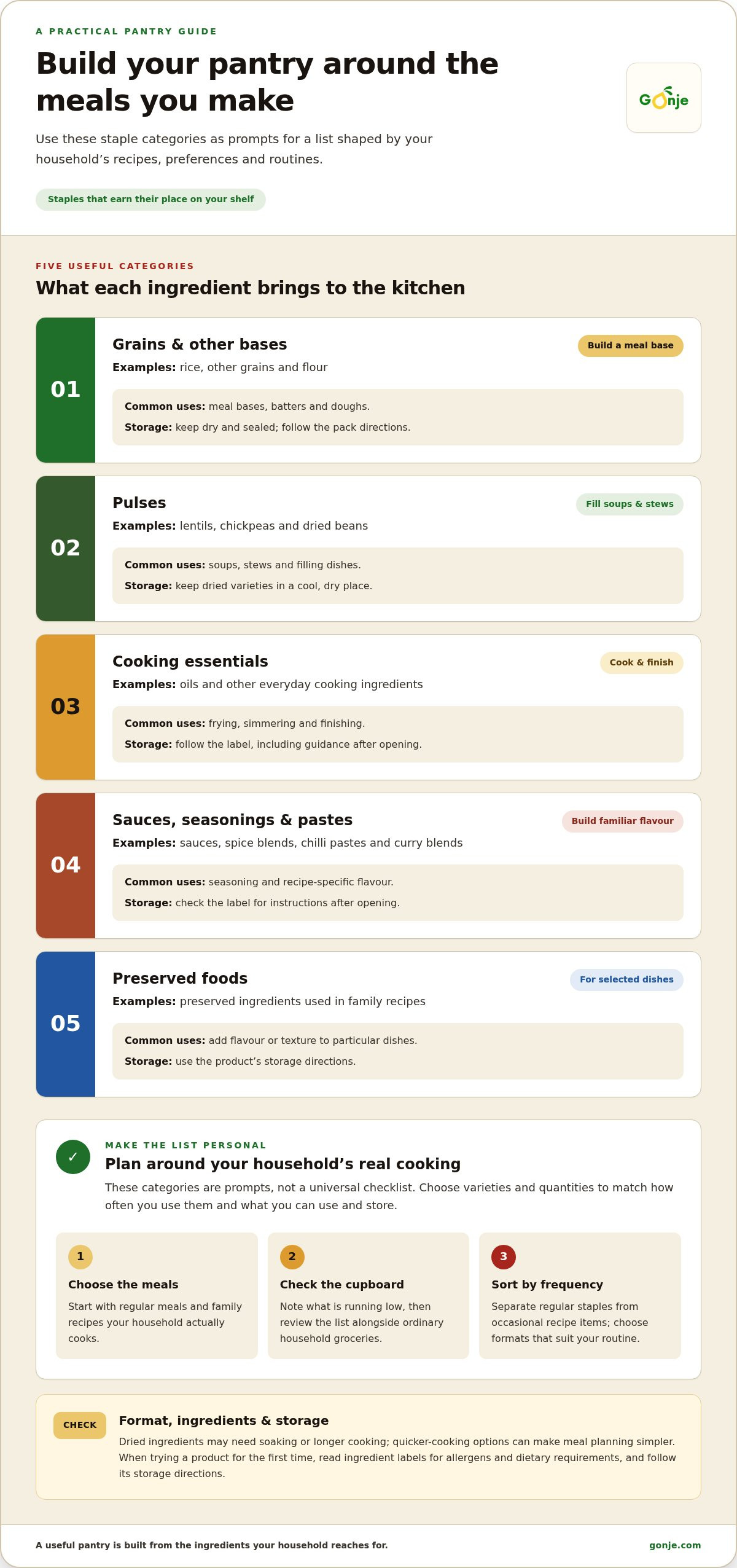
Think about what each ingredient does in a meal, not just where it sits on a shopping list. A pantry has long been a practical place to store household food; the history of the pantry offers useful context for how that role has changed over time. Today, staple categories might include:
- Grains and other bases: rice and other grains used to build a meal.
- Pulses: lentils and dried beans for soups, stews and family recipes.
- Cooking essentials: oils and other ingredients used to fry, simmer or season.
- Sauces and preserved foods: ingredients that add familiar flavour or make a meal easier to prepare.
These are examples, not a universal checklist. Your most useful staples are the ones your household actually cooks with.
Why order traditional staples for home delivery?
When the same ingredients feature in regular meals, a planned restock can save you from discovering an empty jar halfway through cooking. Add familiar staples to a list as you use them, then review it alongside ordinary household groceries. This can reduce repeated shopping trips, particularly when a recipe calls for ingredients that aren’t part of a standard grocery shop.
Online ordering can also make specialty food suppliers easier to discover alongside everyday grocery merchants. Gonje connects Australian households with both, making it easier to look for culturally familiar pantry ingredients as part of a regular grocery routine. The goal isn’t to stock every possible ingredient. It’s to keep the foods that matter to your meals, shared recipes and family routines within easier reach.
Traditional pantry staples to include in a well-used kitchen
A useful pantry reflects the food you cook, not a fixed list every household should follow. Start with ingredients you reach for often, then add less frequent items that make particular family recipes taste familiar. The examples below span different cooking traditions. Use them as prompts for your own list, not as a universal catalogue.
Grains, pulses and dried essentials
Rice can be a regular base for meals, while lentils, chickpeas and dried beans work in soups, stews and other traditional dishes. Flour may support everyday cooking or a specific recipe. Dried formats usually need soaking or longer cooking; quicker-cooking options can make meal planning simpler. Choose varieties and quantities that match how often you use them, so your pantry serves your routine rather than gathering dust.
Sauces, seasonings and cooking bases
Oils, sauces, spice blends and pastes can build the familiar flavour of a dish. A household might use one cooking oil daily, then keep a particular sauce or seasoning for recipes made less often. Chilli pastes, curry blends and fermented sauces are examples from varied food traditions, not staples for every kitchen. Read ingredient labels for allergens and dietary requirements, especially when buying a product for the first time.
| Category | Examples | Common use | Storage note |
|---|---|---|---|
| Grains | Rice, flour | Meal bases, batters and doughs | Keep dry and sealed; follow pack directions. |
| Pulses | Lentils, chickpeas, dried beans | Soups, stews and filling dishes | Store dried varieties in a cool, dry place. |
| Cooking essentials | Oils | Frying, simmering and finishing | Follow the label, including guidance after opening. |
| Flavour builders | Sauces, spice blends, pastes | Seasoning and recipe-specific flavour | Check the label for storage instructions after opening. |
| Preserved foods | Preserved ingredients used in family recipes | Adding flavour or texture to selected dishes | Use the product’s storage directions. |
Use the table as a starting point. Separate everyday ingredients from occasional recipe items, then size your order around what you can use and store. For traditional pantry staples delivery, Gonje connects households with multicultural specialty foods and everyday groceries through a marketplace of specialty suppliers and local grocery merchants. Explore multicultural pantry ingredients as you shape a list around the meals your household loves.
How to compare traditional pantry staples delivery options
The right option depends on what’s missing from your cupboard and what you’re cooking next. A low price alone won’t tell you whether an ingredient suits a family recipe, comes in a useful format or is easy to find again. Compare the range and shopping routine as well as the basket total.
Which delivery option suits your pantry shop?
Use this comparison to match your shopping habits with the kind of restock you need. Each option has different strengths.
| Option | Best fit | Strengths | Practical trade-offs |
|---|---|---|---|
| General grocery delivery | Routine household shopping and familiar pantry refills | Can bring everyday groceries and common cooking essentials into one order. | A standard range may be less suited to finding culturally specific ingredients. |
| Specialty food marketplace | Exploring multicultural food categories and traditional staples | Connects shoppers with specialty suppliers and helps them discover ingredients beyond a usual grocery list. | Allow time to browse categories and compare items with the recipes you have in mind. |
| Direct merchant ordering | Restocking from a familiar specialty or grocery merchant | Offers a direct route to a merchant’s own range and familiar shopping experience. | You may need separate orders if your list spans several merchants or includes everyday groceries. |
What to look for in a useful online pantry range
Clear categories make a real difference. Look for an ordering experience that groups ingredients in ways that help you find familiar products, while leaving room to browse new specialties. A useful range should make it straightforward to plan around regular meals, rather than treating cultural ingredients as an afterthought.
Consider whether specialty staples and everyday groceries can fit into the same shopping routine. Supplier variety can help households keep cooking with ingredients tied to familiar dishes and family traditions. It can also help you discover alternatives for recipes without assuming one ingredient or cuisine suits everyone.
Traditional pantry staples delivery is most helpful when it fits the way you cook. Gonje’s marketplace connects Australian households with multicultural specialty food suppliers and local grocery merchants, bringing specialty foods and everyday groceries together in one place to explore. Compare options by asking a simple question: will this make it easier to find the ingredients your regular meals rely on?
Build a traditional pantry staples delivery list that works
A reliable restock starts with your meals, not a long catalogue of possibilities. Plan around dishes your household already cooks, then check the cupboard to decide what belongs in the next order. This keeps traditional pantry staples delivery practical and helps avoid doubling up on ingredients you won’t use soon.
Plan the list around meals you already cook
Choose a few familiar meals and note the pantry ingredients they share. Check your cupboards before adding anything. An unopened packet or half-full jar may already cover what you need.
Sort the list into two parts: regular staples for meals you make often, and occasional ingredients for particular recipes. Keep the first group as your reusable core. Add the second only when a dish is planned. That way, a family recipe can make the list without every unusual ingredient becoming a permanent restock.
- Choose meals: Write down the dishes you expect to cook before your next shop.
- Check supplies: Note what’s running low and what you already have.
- List staples: Add frequently used items to your core list, keeping recipe-specific ingredients separate.
- Place the order: Review quantities and remove anything you’re unlikely to use.
Be realistic about household use. A smaller quantity may suit a staple you use occasionally, while a regular ingredient may earn a place on each restock. The aim is a list that supports your cooking, not a cupboard packed with duplicates.
Make delivery and storage part of the plan
Before adding an item, read its product description and check the pack size, ingredients and storage directions. Review allergen information and consider household dietary needs. If a product needs particular storage after opening, make sure that fits your kitchen routine.
Keep a short note beside relevant categories, such as “store in a cool, dry place” or “check storage directions after opening”. Follow the product label for specific instructions. Group shelf-stable goods together on your list, but keep it flexible. Recipes change, household needs shift and familiar ingredients can vary between brands or formats.
Save the core list somewhere easy to update. Each time you cook, note when a staple runs low; before ordering, compare the list with what’s still in the cupboard. This turns restocking into a steady habit and helps limit overbuying without losing the ingredients that make home cooking feel familiar. Build your pantry order with Gonje and explore multicultural specialty foods alongside everyday groceries.
Order traditional pantry staples through Gonje
Finding ingredients for home cooking can mean looking beyond an ordinary grocery list. Gonje connects Australian households with multicultural specialty food suppliers and local grocery merchants, bringing a range of familiar food traditions into an online marketplace. It’s a practical place to explore traditional pantry staples alongside everyday groceries, with your regular meals guiding what you look for.
A practical way to discover multicultural pantry foods
Start with the dishes you cook often. You might be restocking familiar ingredients for a family recipe, looking for pantry foods tied to your cultural traditions or planning to try something new. Gonje brings specialty food suppliers and grocery merchants together, helping you browse beyond the usual household essentials.
For more guidance on choosing where to shop, read our Australian specialty food delivery buying guide. You can also explore the ethnic grocery delivery guide for Australia for a closer look at delivery options for culturally familiar groceries.
The right pantry looks different in every home. A useful range should help you find ingredients that make sense for your household’s recipes and routines, rather than suggesting that every cuisine or family cooks from the same list. Use your meal plan as a guide, and browse with a particular dish or restock need in mind.
Turn your pantry list into the next order
Keep the next step simple. Begin with your regular staples, check what’s already in the cupboard, then add ingredients for meals you’ve planned. Separate frequent-use items from occasional recipe ingredients so your list stays clear and easy to revisit. As you browse, use product details to make choices that suit your household and cooking habits.
Traditional pantry staples delivery can support the familiar rhythms of home cooking without making the process feel complicated. You don’t need to rebuild your whole pantry at once. Start with what you’re running low on, then add a specialty ingredient when a recipe calls for it.
Explore Gonje’s food delivery marketplace and build a pantry list around the meals and flavours your household wants to keep close.
Make your next pantry restock work for your kitchen
A useful pantry starts with the meals your household already enjoys. Choose regular staples around those recipes, check what’s in the cupboard before ordering, and keep occasional ingredients separate from your everyday list. That simple routine can make traditional pantry staples delivery more focused and help avoid buying items you won’t use.
Gonje connects households across Australia with multicultural specialty food suppliers and grocery merchants. Explore culturally familiar pantry ingredients alongside everyday groceries, and build a list that reflects your household’s cooking habits rather than a one-size-fits-all checklist.
Start with a few familiar meals. Add the ingredients you’re running low on, then include anything needed for a planned recipe. Explore multicultural food and grocery delivery with Gonje and take the next step towards a pantry that feels right for your kitchen.
Frequently Asked Questions
What are traditional pantry staples?
Traditional pantry staples are familiar ingredients kept on hand for regular home cooking. They’re often shelf-stable and used across everyday meals or family recipes. Examples include grains such as rice, pulses such as lentils and dried beans, cooking oils, sauces, seasonings and preserved foods. The right mix depends on your household’s cuisine, recipes and habits, so there’s no single checklist that suits every kitchen.
Can I get traditional pantry staples delivered in Australia?
Yes, you can order traditional pantry staples for delivery in Australia through grocery services and specialty food marketplaces. Gonje connects Australian households with specialty food suppliers and local grocery merchants, with national delivery coverage. Its marketplace includes multicultural specialty foods and everyday groceries, helping you find ingredients for familiar home cooking alongside regular household items.
What traditional pantry staples should I keep at home?
Keep the ingredients your household uses in regular meals. Your core might include a familiar grain, pulses, cooking oil and the sauces or seasonings that feature in your recipes. Add preserved foods or less frequently used ingredients for particular dishes as needed. Check your cupboards before restocking, and choose quantities that suit your cooking habits. A useful pantry reflects your kitchen, not a universal list.
How do I find multicultural pantry ingredients online?
Start with the dish or ingredient you have in mind, then browse food categories and product descriptions on a specialty food marketplace. Searching by a familiar ingredient or cuisine can help narrow your options. Gonje connects households with multicultural specialty food suppliers and local grocery merchants, making it a place to explore ingredients alongside everyday groceries. Read product information carefully so you can choose items that suit your recipes and household needs.
Is it better to order pantry staples from a grocery store or a specialty food marketplace?
It depends on your shopping list. General grocery delivery can suit routine refills and everyday household items. A specialty food marketplace can be useful if your list includes multicultural ingredients or traditional staples that are harder to find in a standard range. Compare how clearly ingredients are organised and how well the options fit your recipes. The lowest price alone may not show whether an item suits your cooking needs.
How can I plan a pantry staples delivery order around my meals?
Choose meals you expect to cook, then note the pantry ingredients they share. Check your cupboards and mark what’s running low before adding items to an order. Keep frequent-use staples in a reusable core list, and add occasional ingredients separately when a recipe calls for them. Review quantities before placing the order. This simple routine can make traditional pantry staples delivery more focused and help prevent duplicate purchases.
What should I check when ordering packaged pantry foods online?
Read the product description and check the ingredient list, pack size and storage directions before ordering. Review allergen information and consider any dietary requirements in your household. If you need a particular variety or format for a recipe, make sure the description matches what you’re looking for. Check date information where it’s provided, and consider whether you can use the quantity and store the food as directed.


