

What if the smartest Japanese pantry starts with tonight’s dinner, not a long list of unfamiliar names? If you want to buy japanese ingredients online, begin with a dish you already enjoy. A few well-chosen staples can make miso soup, ramen or a simple rice bowl feel within reach, without filling your cupboards with ingredients you’re unsure how to use.
Unfamiliar labels and package formats can make choosing harder. Is the ingredient suited to your recipe? Will you use the whole pack? These are practical questions, not fussy ones. Match each item to a dish, read the listing and check the format before adding it to your basket.
This guide will help you choose Japanese ingredients for familiar meals and everyday cooking, understand labels and formats, and plan a pantry order without unnecessary extras. You’ll also see how online specialty grocery shopping can connect Australian households with hard-to-find international foods. Gonje brings shoppers together with specialty food suppliers, making it easier to explore international ingredients for the dishes you want to cook.
Key Takeaways
- Start with a Japanese dish you plan to cook, then choose ingredients for the roles that recipe needs.
- Read the full listing, including ingredients, storage directions and pack size, rather than relying on one familiar word.
- Compare options by cooking use and format to find what fits your recipe and pantry.
- Before you buy japanese ingredients online, check that every item has a planned use and review your basket for extras.
- Once you know what you need, explore Japanese and other specialty foods through Gonje’s online ordering.
Buy Japanese Ingredients Online by Starting with the Dishes You Want to Cook
Japanese ingredients include pantry goods and fresh foods used in Japanese cooking. They range from rice, noodles and seasonings to ingredients chosen for a particular recipe. For a useful overview of the traditional cuisine of Japan, remember that ingredients work together in dishes, not as isolated items on a shelf.
Decide what you want to cook before you browse. A recipe gives each ingredient a job: one may form the base, another adds flavour, and another completes the meal. Without that guide, unfamiliar names can quickly turn an online basket into a collection of items with no clear use.
A dish-first plan makes your online grocery order more useful. It helps you focus on ingredients for a meal you’ll actually make, then leave room for new discoveries later.
Which Japanese pantry basics suit everyday cooking?
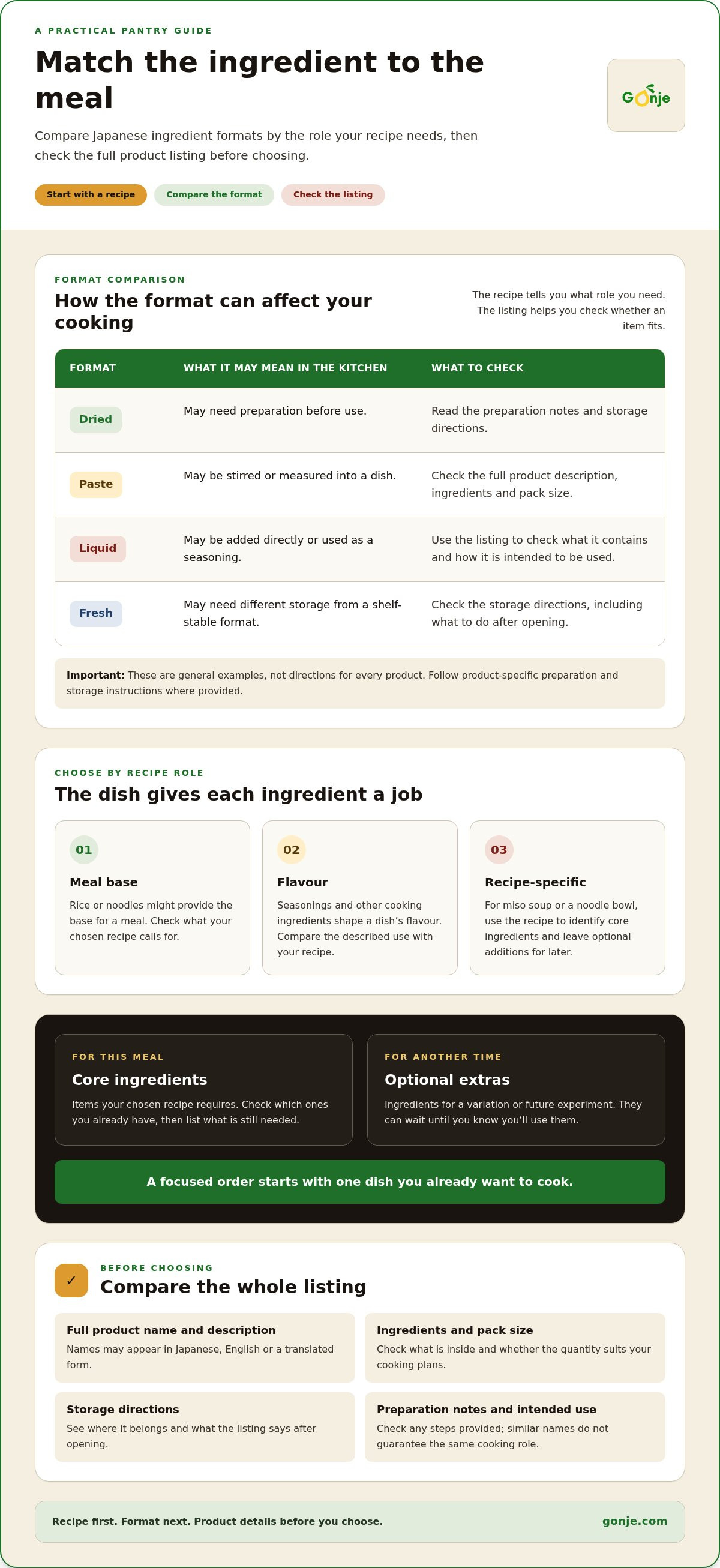
Think in broad categories rather than treating any one list as essential for every kitchen. Rice or noodles might provide the base for a meal. Seasonings and other cooking ingredients shape its flavour. The right combination depends on the dish and the recipe you’re following.
For miso soup, start with the ingredients your chosen recipe calls for, then separate those core items from additions you might like to try. For a noodle bowl, identify the noodles and flavouring the recipe needs. Extras can wait until you know you’ll use them. Staples earn their place through regular use; optional ingredients suit a specific variation or a future experiment.
How can a first-time shopper choose a starting dish?
Pick one recipe you already want to cook. It could be a simple soup, a noodle bowl or another familiar meal. Write down the ingredients the recipe requires, then mark which ones you already have. This gives you a short, purposeful list instead of a guess at what a Japanese pantry should contain.
Keep the first order focused. Put ingredients for that meal in one group, and tempting extras in another. If an unfamiliar name appears, read it in the context of the recipe: what role does it play, and is it needed for this dish? Names can feel less daunting when they’re attached to a meal you understand. As you cook, you’ll learn which ingredients suit your taste and routine.
When you’re ready to buy japanese ingredients online, use your recipe as a guide while browsing specialty groceries. Gonje connects Australian shoppers with specialty food suppliers, offering a practical way to explore international ingredients for home cooking. Begin with the meal, identify what it needs, and build your basket from there.
Choose Japanese Ingredients Online by Reading Labels and Understanding Formats
A familiar-sounding name is only a starting point. Japanese ingredient names may appear in Japanese, English or a translated form, and wording can vary between listings. Read the full product name and description before adding anything to your basket. The details help you judge whether an ingredient suits your recipe, how much you’ll receive, and how to store or prepare it.
Check the ingredient list, pack size, storage directions and any preparation notes. These details can clarify what’s inside and whether the quantity fits your cooking plans. Similar names don’t guarantee the same taste, texture or cooking role. For broader guidance on understanding food labels, Healthdirect Australia explains how to read key label information.
What should you check on an online ingredient listing?
Read beyond the first word or product photograph. Compare the full name with the description, then look for ingredients and pack size. Storage instructions can tell you whether an item belongs in the pantry, fridge or another place after opening. Preparation notes may explain whether it needs soaking, dilution or another step. When a detail matters to your recipe, use the listing’s wording rather than relying on assumptions.
A recipe may call for a particular kind of ingredient or use. Don’t treat two listings as interchangeable just because their names look alike. Check what each description says about its contents and intended use.
How do Japanese ingredient formats affect your recipe?
Format can change how an ingredient fits into your cooking routine. Dried items may need preparation before use; a paste may be stirred or measured into a dish; a liquid may be added directly or used as a seasoning. A fresh format may need different storage from a shelf-stable one. These are general examples, not directions for every product.
Miso and soy sauce are familiar examples, but their names alone don’t tell you everything about a specific listing. Check the described format, ingredients and storage directions. Follow product-specific preparation instructions where provided, as general cooking advice shouldn’t replace them.
The recipe and product description together guide a suitable choice: the recipe tells you what role and format you need, while the listing helps you judge whether the item matches. That’s a useful habit whenever you buy japanese ingredients online, especially when comparing unfamiliar names or package types.
Once you know what your recipe calls for, explore specialty groceries online through Gonje and browse with those label details in mind.
Compare Japanese Ingredient Options by Recipe, Quantity, and Pantry Use
Once you know what you’re planning to cook, compare ingredients by the job they need to do. A meal might need a grain for its base, a seasoning for flavour or a soup base. These are general cooking suggestions. BBC Good Food’s introduction to Japanese flavours and techniques can also help you cook like a local as you plan.
Which ingredients belong in a Japanese meal plan?
Use the recipe to identify each role, then compare the relevant format and listing details. The table offers general examples. Use each product’s description to guide your final choice.
| Cooking use | Format to look for | Listing detail to check |
|---|---|---|
| Rice-based meal, grain | A format specified by the listing | Product description, ingredients and storage guidance |
| Noodle bowl, main ingredient | Dried or chilled, if stated | Preparation directions and the quantity in the pack |
| Soup, base or seasoning | Paste, liquid or dried, as described | Ingredients, how to prepare it and storage after opening |
| Seasoning a cooked dish | Liquid or another stated format | Suggested use, ingredients and storage directions |
How much should you order for a first recipe?
Start with the recipe’s stated quantities. Compare them with the pack size shown in the listing, then consider whether you’ll use the ingredient again in meals you already make. If it has one specific role in a single recipe, a quantity closer to what you need may be more practical than buying extra. For an ingredient you expect to use regularly, a larger amount may suit your routine, provided the storage guidance works for your kitchen.
Check how the listing says to store an item, including any directions for after opening. Don’t assume a pantry staple will stay suitable indefinitely, or that two formats can be stored the same way. Use the product’s own guidance to decide whether the quantity makes sense for your meal plan.
Recipe fit matters more than having the widest range. A focused basket of ingredients matched to your dishes is more useful than a cupboard full of unfamiliar options. As you buy japanese ingredients online, compare each item by its role, the recipe quantity and the stated storage instructions.
Use This Checklist Before You Order Japanese Ingredients Online
A few checks can turn a browsing session into a practical pantry order. Use this sequence before placing your order, especially if ingredient names or formats are new to you.
- Choose the meal. Name the dish you plan to cook and keep its recipe nearby. This gives each item in your order a clear purpose.
- Match each ingredient to the recipe. Check the full product name and description against the recipe’s wording and intended cooking use. Don’t rely on one familiar word if the rest of the listing describes a different ingredient or use.
- Check the quantity and format. Compare the listed amount with what the recipe calls for. Consider whether you’ll use the ingredient again, and read the storage directions before choosing a format.
- Review delivery and order details. At checkout, read the delivery information and order details displayed before you complete the purchase. Make sure the order suits your plans and kitchen routine.
- Review the whole basket. Remove duplicates and anything without a recipe, pantry need or planned use. A shorter list can be the better order.
What should you check before adding an item to your basket?
Pause on each listing. Confirm that the product name and stated use make sense for your recipe, then check the quantity and storage instructions. If the description doesn’t match what the recipe calls for, don’t add it just because the name looks familiar. Remove repeat items unless you have a clear reason to order more.
How can you make an online pantry order easier to manage?
Group items by the meal they’ll support. That makes it easier to see whether an ingredient belongs to your planned dish or has a regular place in your pantry. After ordering, keep a short note of what to use first and follow each product’s storage and preparation directions. For broader help comparing online grocery services, read our ethnic grocery delivery guide.
Before you buy japanese ingredients online, make one final pass through the basket: every item should have a purpose, a suitable quantity and clear storage guidance. Explore specialty groceries through Gonje for ingredients to bring into your home cooking.
Find Japanese Ingredients Online Through Gonje for Your Next Home-Cooked Meal
A useful Japanese pantry order doesn’t need to cover every dish. Choose one meal, identify the ingredients by their role, then compare product descriptions with what the recipe calls for. Check the format and quantity, read the storage guidance, and review your basket before placing the order. That simple approach keeps the focus on food you’re ready to cook, rather than ingredients that may sit unused.
How does Gonje make specialty food shopping more convenient?
Gonje connects Australian shoppers with specialty food suppliers and supports online ordering of multicultural groceries, including hard-to-find international ingredients. You can browse specialty foods as part of planning an ordinary home-cooked meal. Start with a recipe, use its ingredient categories to guide your search, and compare listings with your cooking plans. That keeps the decision grounded in your kitchen routine.
For a wider view of what to consider when choosing where to shop, the 2026 specialty food delivery buying guide offers broader context for exploring specialty food delivery in Australia. Your recipe remains the best guide to what belongs in this particular order.
What is the simplest next step for a first order?
Pick one Japanese-inspired dish you’d like to make. Write down the ingredient categories it needs, such as a grain, seasoning or soup base, then note what you already have at home. Browse relevant specialty-food listings and compare each product description with the recipe. Pay attention to the stated format, quantity and storage directions so the item suits both the dish and your pantry.
Before checkout, look over the basket and the order details shown there. Keep items that match the meal or have a clear planned use. Leave out anything you’ve added only because the name is unfamiliar or the category sounds interesting. You can explore more ingredients as you cook and discover what you enjoy.
If you want to buy japanese ingredients online, let the meal lead the way: choose a dish, match ingredient roles, read listings and review the basket. Gonje brings specialty food suppliers together with Australian shoppers through online ordering, making it a practical place to explore foods for home cooking. Browse Gonje and plan your next Japanese-inspired meal at your own pace.
Plan Your Next Japanese-Inspired Meal with Confidence
Start with a dish you’re keen to cook. Identify the ingredients it needs, then use product descriptions, quantities and storage directions to choose what suits your recipe and pantry. When you buy japanese ingredients online, a focused list helps you make confident choices without adding extras you may not use.
Gonje connects Australian consumers with specialty food suppliers and offers online delivery of multicultural and specialty foods across Australia. Specialty foods, everyday groceries and restaurant meals come together on one platform, making it easier to explore food options alongside your usual kitchen shop.
Your next step can be simple: choose a meal, make a short ingredient list and browse with that plan in mind. Browse specialty foods on Gonje and plan your next meal. Take it one dish at a time, and let your pantry grow around the meals you enjoy making.
Frequently Asked Questions
Where can I buy Japanese ingredients online in Australia?
You can explore Japanese and other specialty food options through online grocery platforms such as Gonje. Gonje connects Australian consumers with specialty food suppliers and offers online delivery of multicultural and specialty foods across Australia. Browse using the dish you plan to cook, then compare listing descriptions with your recipe.
What Japanese ingredients should I buy first?
Start with the ingredients required for one dish you already want to make. A recipe may call for a grain, noodles, seasonings or a soup base, but there’s no single starter list that suits every kitchen. Check what you already have at home, then add only what the recipe needs. Once you’ve cooked with those ingredients, you’ll have a better feel for what belongs in your regular pantry.
How do I know whether an online Japanese ingredient suits my recipe?
Compare the recipe with the full product listing, not just its name. Read the description, ingredients, format, quantity and storage directions. Check for preparation notes too, especially if the recipe calls for a specific type or form. Similar names don’t always mean ingredients have the same taste, texture or use. If the listing’s details don’t match the recipe, choose an option that does.
Can I buy Japanese pantry staples and other groceries in one online order?
Gonje brings specialty foods, everyday groceries and ready-to-eat restaurant meals together on one platform, so you can explore these categories in one online shopping destination. To keep your order organised, separate the items you need for a recipe from your usual grocery list. Review the checkout details before placing your order so you understand which items are included and the delivery information shown.
How should I store Japanese ingredients after they arrive?
Follow the storage directions on each product’s label or listing. Different formats may need different care, so don’t assume every pantry ingredient belongs in the cupboard after opening. Check the instructions when unpacking, and make a note of any products that need to be used or stored a particular way. If the listing includes preparation directions, keep those with the ingredient until you’re ready to cook.
Are Japanese ingredients the same as other Asian ingredients?
No. Japanese ingredients are used within the varied food traditions of Japan, while other Asian cuisines have their own ingredients, preparations and cooking uses. Some broad categories, such as rice, noodles or seasonings, appear across different cuisines, but that doesn’t make every product interchangeable. Choose ingredients based on the dish and recipe you’re making, and read the listing to understand the specific product’s stated use.
How can I avoid buying too many unfamiliar Japanese ingredients?
Choose one recipe before you browse, then list only the ingredients it calls for. Check your pantry for items you already own, compare recipe quantities with listed pack amounts, and consider how often you’ll use each ingredient again. Remove duplicates and anything without a clear planned use. This focused approach makes it easier to buy japanese ingredients online with confidence, without collecting extras just because their names are new to you.


