

The smartest Greek food order isn’t necessarily the biggest one. If you’re looking for greek specialty foods delivered, start with what you’ll cook and eat: a pantry restock, ingredients for a particular recipe, or a ready-to-eat meal. Hard-to-find foods can take more than one shop to track down, and a product name alone may not tell you how an ingredient fits into a recipe.
Pantry staples, fresh ingredients and prepared meals serve different needs. Choosing between them is easier when you know whether you’re planning a recipe, restocking your cupboards or organising dinner with less preparation.
This guide explains how to choose Greek foods by use, what to look for in product descriptions, and how to plan a delivery order around your household. Gonje connects Australian customers with local suppliers of multicultural specialty foods, everyday groceries and ready-to-eat meals, with delivery nationally across Australia. Start with the way you eat, then build your order around it.
Key Takeaways
- Start with a dish or occasion, then list the ingredient categories and formats you need.
- Read product names, ingredient details, formats and suggested uses to judge whether an item suits your recipe.
- Choose pantry goods for cooking and restocking, fresh foods for dishes that need them, or ready-to-eat meals when you want less preparation.
- Make greek specialty foods delivered part of a practical order by matching each item to how you cook, eat and plan meals.
- Use Gonje to browse multicultural specialty foods, everyday groceries and ready-to-eat meals from local suppliers in one marketplace.
Greek specialty foods delivered: what can you order for home?
Greek specialty food delivery means ordering culturally specific foods online for delivery to your home. That could be groceries for cooking, fresh ingredients for a planned meal, or prepared food from a restaurant. Specialty groceries are ingredients or packaged foods to use at home; restaurant delivery is a meal prepared for you to eat.
This distinction helps you decide what belongs in your basket. For a shared table, you might want ingredients to prepare several dishes. On a busy weeknight, a ready-to-eat meal may be more practical. You can also combine the two, with pantry goods for later and food for tonight.
Greek cooking has regional and family variations, so there isn’t one fixed list of ingredients that defines every dish. The overview of Greek cuisine offers background on its history, ingredients and dishes. When shopping, focus on the meal you want to make and the role each item will play, rather than choosing something simply because it sounds unfamiliar.
Greek pantry foods for cooking at home
Pantry staples help build everyday meals and support recipes you’ve planned in advance. Broad categories include cooking oils, grains, pulses, seasonings and preserved foods. These items can form part of a meal, add flavour or round out a dish without a last-minute shop.
Start with recipes you already cook, or one Greek-inspired dish you’d like to try. Note the ingredients and formats it calls for, then choose pantry goods with a clear use in your kitchen. A staple you’ll reach for again is often more useful than an unfamiliar item with no meal in mind.
Fresh foods and ready-to-eat Greek options
Fresh foods serve a different purpose from shelf-stable pantry goods. They’re intended for a particular dish or meal, so plan around when you’ll cook and how you’ll use them. Fresh produce and other perishable ingredients can bring texture and contrast to a shared spread or a home-cooked dinner.
Ready-to-eat restaurant meals suit evenings when preparation time is short or you’d rather not cook from scratch. Think about the occasion first: a meal for one, a quick dinner at home or food to share. Then choose cooking ingredients, prepared food or a combination that fits the way your household eats.
With greek specialty foods delivered, the useful choice isn’t always pantry versus restaurant. It’s the food that fits your plan. A marketplace connecting shoppers with local suppliers can bring specialty foods, everyday groceries and ready-to-eat meals into one place, making it easier to organise an order around both tonight’s dinner and the week ahead.
How to recognise Greek ingredients that suit your cooking
A product name can catch your eye, but the recipe tells you whether an item belongs in your basket. Intended use is the most reliable first filter. Decide what you’re making, then work out whether you need an ingredient to cook with, a pantry food to keep on hand, fresh produce for a particular dish or a prepared meal.
This matters with greek specialty foods delivered online, where you can’t turn a packet over in person. A clear description helps you judge an item’s role, format and ingredients before ordering. Don’t assume a product will work in your recipe simply because its label says Greek-style.
Read product details with the recipe in mind
Keep your planned dish nearby as you read. Look for the product name, ingredient details and form, then compare them with the recipe. An ingredient may be whole, prepared, preserved or ready to serve. Those differences affect how you’ll use it, how much preparation remains and whether it suits the cooking method.
Suggested uses can help you understand a product, but compare them with your own recipe rather than assuming an item suits every version of a dish.
- Identify the format: Is it an ingredient, pantry food, fresh produce or a prepared meal?
- Check the details: Do the listed ingredients and description fit what your recipe calls for?
- Consider the job: Will you cook with it, serve it as part of the meal or eat it as prepared?
A recipe might call for a particular texture or form, not just a broad flavour category. A product description that gives those details is more useful than a label alone. If you’re adapting a family recipe, use its instructions as your guide and compare the product information with them.
Use food traditions as context, not a rigid checklist
Greek food isn’t one fixed set of ingredients. Cooking varies between regions and households, and people adapt recipes to the ingredients they have and the way they like to eat. Mediterranean food traditions offer helpful context: olives or oregano may appear in familiar dishes, but their presence doesn’t make every product suitable for every Greek recipe.
Healthdirect Australia’s explanation of the Mediterranean diet in Australia provides broader context about this way of eating. Use cultural and ingredient cues to guide your search, then return to the product details and your recipe. One ingredient list isn’t a definitive test of whether a dish or food is Greek.
A short recipe plan can prevent impulse buys. Note the dish, the ingredient’s role and the form you need. Then decide whether the product description gives you enough information to make a sensible choice. If you’re exploring new ingredients, begin with one that has a clear place in a meal you already know how to prepare. That makes it easier to use what you order and decide what to try next.
Gonje brings specialty foods, everyday groceries and ready-to-eat meals from local suppliers together in a marketplace for Australian customers. Explore Greek food options on Gonje with your recipe in mind, and compare each description with what you plan to cook.
Compare Greek pantry staples, fresh foods and ready meals
Choose by two things: the meal you have planned and the time you have to prepare it. Pantry goods suit recipes you’ll cook yourself and regular cupboard top-ups. Fresh ingredients work best when they have a place in a meal soon. Ready-to-eat food is practical when getting dinner on the table matters more than cooking.
Use the comparison below to decide which format fits your routine. Product details and storage instructions still matter, especially for fresh or prepared food. Follow the guidance shown for each item, and plan to use perishable ingredients in good time.
| Food type | Best suited to | Planning to consider |
|---|---|---|
| Pantry goods | Cooking from scratch, planned recipes and topping up cupboard essentials | Check the format, ingredients, storage instructions and how often you’ll use it |
| Fresh ingredients | A particular meal you intend to prepare soon | Consider when you’ll cook, how much you need and any use or storage guidance |
| Ready-to-eat meals | A meal with little or no cooking at home | Read the description and follow the meal’s heating or serving instructions |
In short, choose pantry goods for future cooking, fresh ingredients for an upcoming meal, and ready-to-eat food when time is tight. A mixed basket can work too, as long as each item has a clear purpose.
Choose pantry goods for planned home cooking
Pantry shopping makes sense when you know what you cook often or have a recipe in mind. Start with the ingredients it calls for, then consider whether a staple could also suit other meals in your household’s regular rotation. That gives the purchase a use beyond one dinner.
Think about cupboard space and your usual cooking habits. A larger or less familiar item may not suit a household that cooks a dish only once. A familiar category used across several recipes may be easier to work into the week. Read storage directions and choose a format that fits how you keep food at home.
Choose fresh or prepared food for immediate meals
Fresh ingredients are most useful when you can prepare them around the time you intend to eat. Add them to your plan for a specific dish, and check any product guidance about use and storage. This helps avoid buying fresh food without knowing when it will reach the table.
Ready-to-eat meals serve a different need. They can take the cooking out of a busy evening or provide a straightforward option when you don’t want to prepare dinner from scratch. Check the description to understand what kind of meal you’re ordering, then follow its serving or heating directions. With greek specialty foods delivered, matching each format to your meal plan helps keep the basket practical, whether you’re stocking the cupboard or sorting dinner.
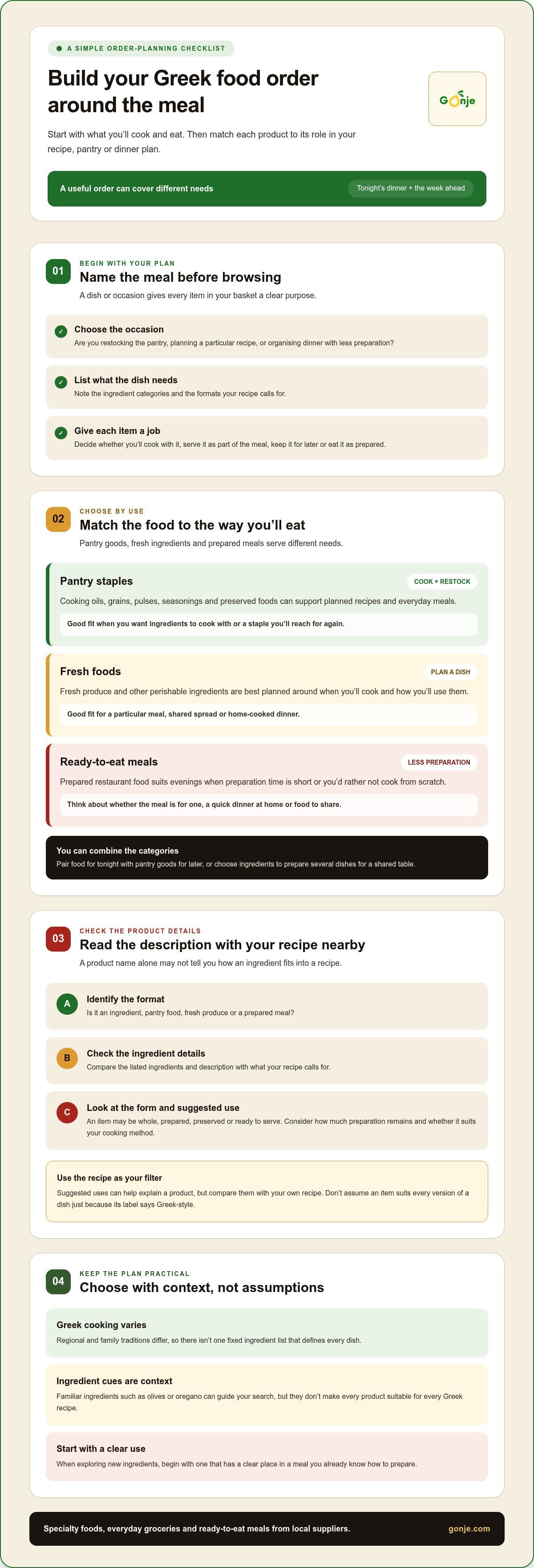
Plan a Greek specialty food delivery order that works
A useful basket starts with a meal, not a long scroll through unfamiliar listings. Decide what you’re cooking, what the household needs or whether you’d rather order a prepared meal. Then add items that serve that plan. This keeps greek specialty foods delivered focused on what you’ll use, rather than a cupboard full of hopeful purchases.
Build the basket around a meal or pantry top-up
Use these steps to shape an order around your kitchen routine:
- Choose the occasion. Pick a dish for a shared table, a weeknight dinner, a planned cooking session or a pantry restock. If you don’t intend to cook, start with the meal you want ready to eat.
- List what the plan needs. For a recipe, note the ingredient categories and formats it calls for. For a restock, check what’s already in the cupboard and what your household regularly uses.
- Sort items by purpose. Group the list into pantry goods for later, fresh foods for a meal you’ll prepare soon, and ready-to-eat food for convenience. A mixed order can work if each item has a clear use.
- Set practical quantities. Think about how many people you’re feeding, the recipe amount and how often you’ll use the item again. Avoid quantities that don’t suit your storage space or normal cooking habits.
- Browse and compare descriptions. Match product details with your list. Check the format and suggested use, and keep the recipe close so you can see whether each item fits.
Review the order before checkout
Pause before placing the order. A quick basket check can catch a mismatch between the meal you planned and what you’ve selected. Confirm the item descriptions and quantities, then consider whether fresh ingredients fit your cooking schedule. Read any stated storage, handling, serving or heating information so you know what to do with each item.
Next, review the delivery information displayed for the order, including any charges shown at checkout. Use the checkout details for the final order total rather than relying on a remembered fee or an assumed delivery figure.
For a pantry restock, check that each addition will be useful beyond one recipe. For a meal order, make sure the selected food matches the occasion and the number of people you’re feeding. These small checks make the basket easier to use once it reaches your kitchen.
Ready to put a meal plan into practice? Browse Greek specialty food options on Gonje and organise your basket around what you’ll cook or eat.
Order Greek specialty foods through Gonje
Gonje is an Australian marketplace that connects customers with local suppliers of multicultural specialty foods, everyday groceries and ready-to-eat meals. It brings food discovery and regular shopping together, with on-demand ordering and delivery nationally across Australia.
For anyone looking for greek specialty foods delivered, the marketplace offers a practical way to browse food options for a recipe, a pantry need or a meal you’d rather have prepared. Read each description to understand what an item is and how it may fit your plans, rather than relying on a Greek-style label alone.
Find specialty foods alongside everyday groceries
Specialty food shopping can fit into your regular routine. Gonje brings multicultural food options and everyday groceries together in a marketplace connected with local suppliers. Browse food from different cultural traditions alongside groceries your household uses regularly.
That’s useful for a planned meal as well as a pantry top-up. Browse with a dish in mind, or explore when you’re looking for something new to cook. Check product descriptions as you go, and let the ingredients, format and suggested use guide your choices.
Make the next order simple
Keep the decision grounded in your kitchen. Start with the occasion, then choose the type of food that fits: ingredients for cooking, groceries for everyday use or a ready-to-eat restaurant meal. Gonje’s marketplace brings specialty foods and meals from local suppliers together for delivery nationally across Australia.
Before ordering, review what you’ve chosen. Read the product details, check quantities and look over the delivery and checkout information shown for your order. This final glance helps you make sure the items suit your plan and understand the total before placing the order.
There’s no need to overcomplicate it. Choose a meal, a pantry need or an occasion, then browse with that purpose in mind. Browse specialty foods on Gonje.
Make your next meal plan easier to shop for
Start your next order with one small decision: what would make the coming week easier in your kitchen? It might be trying a recipe you’ve been saving, replacing a pantry item you’ve run out of, or choosing dinner that needs less preparation. A clear purpose makes it easier to browse thoughtfully and choose food you’re likely to use.
That’s the practical side of greek specialty foods delivered. You don’t need to plan an elaborate feast or overhaul your usual cooking. Start with a meal or household need, then explore options that fit. Gonje’s marketplace connects Australian shoppers with local food suppliers, bringing specialty foods, everyday groceries and ready-to-eat meals together for delivery.
Browse the range, follow the product details and build an order around the way you actually cook and eat. Browse specialty foods on Gonje and find a useful starting point for your next meal.
Frequently Asked Questions
What are Greek specialty foods?
Greek specialty foods are groceries and prepared foods associated with Greek cooking and food traditions. They may include ingredients for home recipes, pantry items used in Greek-inspired meals, or dishes prepared by restaurants. The category is broad, not a fixed checklist. A food’s usefulness depends on its ingredients, format and intended role in the meal you’re planning.
Can I order Greek specialty foods online in Australia?
Yes. Gonje connects Australian customers with local suppliers through a marketplace for multicultural specialty foods, groceries and ready-to-eat meals. Browse Greek food options alongside other food listings, then use the descriptions to decide what fits your meal or pantry. Gonje serves customers nationally across Australia, so you can explore greek specialty foods delivered from home.
How do I choose Greek ingredients for a recipe?
Use the recipe as your guide. Note the ingredient’s role, required form and any preparation details, then compare those with the online description. If you’re adapting a recipe, think about what the ingredient contributes, such as texture, aroma or seasoning. Avoid choosing by a cuisine label alone. A clear match to the dish matters more than a product sounding familiar.
Are Greek pantry foods different from Greek ready meals?
Yes. Pantry foods are groceries you keep for cooking or serving later, while ready meals are prepared for eating with little or no cooking at home. A pantry purchase may support a recipe you plan to make another day; a ready meal suits an evening when you want dinner without starting from ingredients. Check each item’s directions for storage and preparation.
How should I plan a Greek food delivery order?
Begin with the reason for ordering: a particular meal, a household restock or a night off cooking. Write down what you need for that purpose, then browse and add items by use. Keep quantities realistic for the people you’re feeding and the way you store food. Before checkout, review the selected items and make sure the basket still matches your original plan.
What should I check before ordering specialty food online?
Read the product name and description closely. Check the format, listed ingredients, suggested use and any storage, handling or preparation information provided. Make sure the quantity suits your recipe or household needs. Before placing the order, review delivery details and any charges shown at checkout. Use the displayed total for your order rather than relying on an estimate or remembered figure.
Can I order Greek ingredients and everyday groceries together?
Yes. Gonje’s marketplace brings multicultural specialty foods and everyday groceries together, so you can browse cooking ingredients while also looking for household essentials. You can also explore ready-to-eat restaurant meals. Make one short list for your recipe and another for routine groceries, then review product details and checkout information before ordering.


