

The closest-sounding substitute isn’t always the right one. A regional ingredient can bring a particular flavour, texture or cooking quality that a familiar alternative won’t match. If a mainstream supermarket doesn’t stock it, learning how to find authentic ingredients for traditional recipes may mean checking another name, language or source before changing the dish.
It’s frustrating when a recipe’s ingredient list doesn’t match Australian labels or local shelves. A substitution can work, but it may change the result. Start by identifying which ingredients define the dish, then look for a credible source that suits the recipe’s regional context.
This guide explains how to read recipes and labels, compare names, and look beyond the supermarket to specialist grocers and online options. Gonje’s specialty food marketplace is one way to discover ingredients from suppliers. Check current listings and product details rather than assuming an item is available. If you can’t find the exact ingredient, you’ll also learn how to weigh alternatives and consider what may change in the pot.
Key Takeaways
- Learn how to find authentic ingredients for traditional recipes by first identifying the dish’s regional version and the ingredients that shape its flavour or texture.
- Search alternate spellings, transliterations and regional names to find ingredients listed differently across recipes and shops.
- Compare supermarkets, specialist grocers, community recommendations and online marketplaces. Check the seller’s product details before choosing.
- Check an ingredient’s form, label, storage guidance and seller information. Packaging or country of origin alone doesn’t confirm it suits the recipe.
- If the exact ingredient is hard to source, consider what a substitute may change before deciding whether it fits the dish.
What makes an ingredient authentic for a traditional recipe?
Authenticity isn’t a single test. An ingredient is a good fit when it reflects the dish’s culinary context: its region, how it’s prepared and the role it plays in the finished food. That context matters more than a label that simply says “traditional” or “authentic”.
Authentic ingredients are those that make sense for a dish’s particular tradition, while recognising that traditions can vary and change. A recipe may have different versions across regions, households and seasons. People also cook with what’s available to them. A family recipe passed down by a relative can carry as much meaning as one printed in a cookbook.
Traditional ingredients and modern adaptations aren’t the same thing, but neither needs to be dismissed. An adaptation can be delicious and thoughtful. Describe it honestly, and consider what it changes in the dish’s flavour, texture or character.
Why the recipe’s origin and version matter
Before searching, note the recipe’s stated region, language, author and source. A dish name alone may not tell you which local version the writer means. The ingredient list, method and recipe notes can offer useful clues.
Ingredients can also point to a particular culinary context. Masa harina, gochujang and sumac, for example, each have a specific place in different food traditions. None is a universal requirement for every dish associated with a broad cuisine. Check what the recipe calls for and how the ingredient is used before looking for a substitute.
Australian food traditions deserve the same attention to context. The phrase “bush tucker” covers a wide range of native foods, not one uniform cooking tradition. For a broad introduction, see what is bush tucker, then look for information related to the specific ingredient and tradition in your recipe.
Authenticity without gatekeeping
There isn’t one cook who can speak for every household or region. Listen to people with a connection to the food, including family members and community cooks, and compare their knowledge with the recipe’s published source. Differences between versions can be useful clues, not proof that one is wrong.
Keep personal preference separate from claims about tradition. “I prefer this version” is different from “this is the only authentic version”. That distinction helps you cook with respect and make informed choices. It’s a useful starting point for how to find authentic ingredients for traditional recipes: understand the version in front of you before deciding what belongs in the pot.
How to read a traditional recipe and identify the ingredients that matter
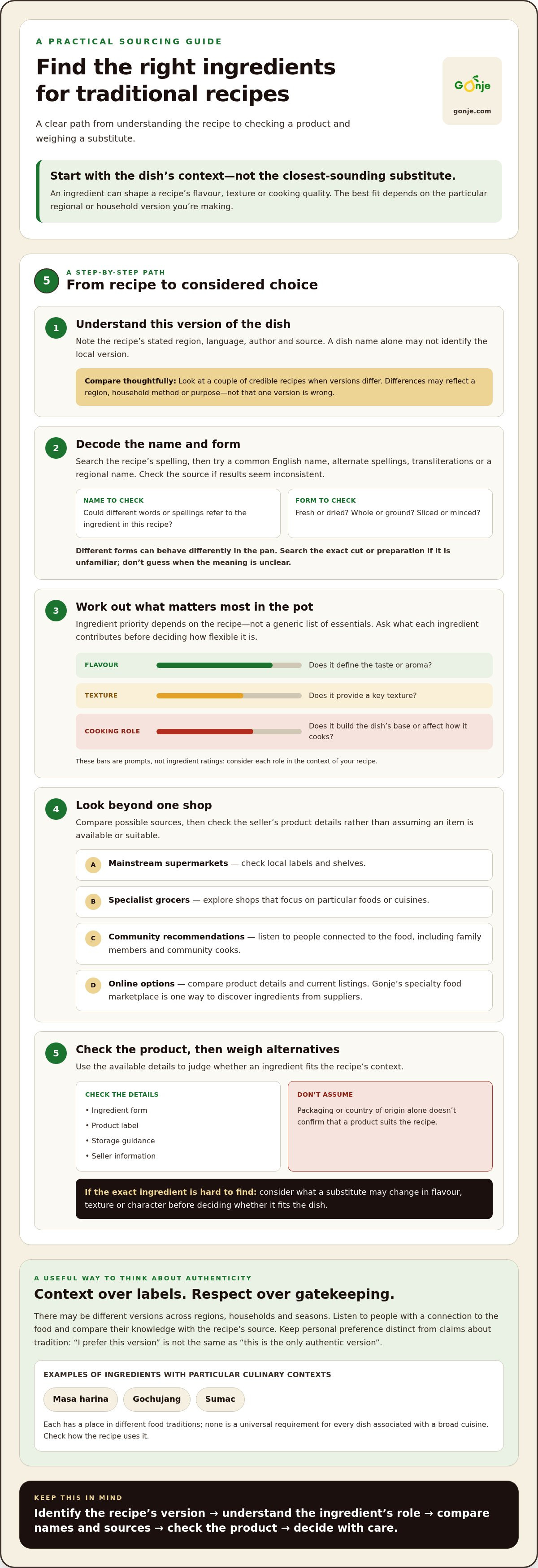
Turn the recipe into a sourcing plan before you start searching. First identify the version of the dish. Then decode unfamiliar names and forms. Finally, decide which ingredients are central and which may be more flexible. This makes how to find authentic ingredients for traditional recipes a practical process, not a hunt for a generic list of “must-have” items.
Check the recipe source before searching
Look for the author’s cultural or regional context, if provided, and note where the recipe comes from. A family recipe, a cookbook by a writer with relevant experience, and a community food source can each offer useful context. Recipe databases can help you compare versions, but they’re a starting point, not proof that every recipe with the same name is identical.
If the dish has regional variations, compare a couple of credible recipes. Note what they share and where they differ. A difference doesn’t mean one version is wrong. It may reflect a local style, a household method or a different purpose for the dish.
Translate unfamiliar names into useful search terms
Search the spelling used in the recipe, then try a common English name if you know it. Transliteration can create several spellings for the same term, while a regional name may refer to something more specific than a broad English translation. If search results seem inconsistent, return to the recipe source and check what it means before settling on a match.
Pay attention to form, too. Fresh and dried, whole and ground, or sliced and minced ingredients can behave differently in the pan. If a recipe names a cut or preparation you don’t recognise, search that exact wording alongside the dish name. Don’t guess when the meaning is unclear.
Ingredient priority depends on the recipe, not a generic list of “essential” ingredients. Ask what each item contributes. Does it build the dish’s base, provide its main texture or define a particular aroma? Those ingredients usually deserve closer sourcing. A garnish or finishing touch may allow more room to adapt, though it can still matter to the version you’re making.
As you read, mark ingredients “central”, “check the form” or “finishing touch”. Use that short list to guide your search and keep track of anything to verify with the recipe’s author or a knowledgeable source.
For a general introduction to food label elements, you can read the USDA’s guide to understanding food labelling regulations. It’s a United States resource, so don’t treat it as Australian labelling guidance. If you’re looking for specialty ingredients, Gonje’s specialty-food marketplace is one possible discovery route. Check current listings and product details before choosing.
Where to find authentic ingredients across Australia
Once you know the recipe version and the ingredient form you need, choose a source that can answer your questions. A supermarket, specialist grocer, community recommendation and online marketplace each offer a different starting point. Stock varies, so treat each as a lead to check, not a promise that the exact ingredient will be available.
Choosing between general and specialist grocers
Start with the international aisle at a mainstream supermarket for familiar pantry items and products with clear labels. For a less common regional ingredient, a specialist grocer may be a better place to ask. Be specific: ask whether the item is whole or ground, fresh or dried, and whether it suits the dish you’re making. If you’re comparing products, have the recipe’s wording handy.
Community knowledge can help you identify the right kind of shop or the name people use for an ingredient. Ask someone familiar with the cuisine, or check a community cooking group or trusted cultural source. Recommendations are useful clues, but confirm that the product matches your recipe’s version.
Using online sources and community knowledge
Online searches can connect you with sellers beyond nearby shelves. Search the ingredient name alongside the dish or region, and try alternate spellings if the first results don’t fit. Read the seller’s description closely. If key details are missing, contact the seller before ordering rather than relying on a product photo or broad category label.
Gonje is one possible way to discover multicultural specialty foods and regional ingredients from suppliers. Listings and delivery availability can vary, so check current product details before relying on a particular item for your recipe.
Compare sources before you order:
- Supermarket international aisle: Is the name and form clear? Does it suit the recipe?
- Specialist grocer: Can the seller explain the ingredient’s name, origin details, storage and suitable uses?
- Community recommendation: Does the advice relate to the same dish or regional version?
- Online marketplace: Are the product description, seller information and delivery details clear enough to make an informed choice?
Keep a note of what you checked and which source confirmed the details. If you’re still unsure, ask the seller a focused question before placing the order. This can help you avoid choosing an ingredient that sounds right but comes in a different form or serves a different purpose.
How to check labels, quality, and possible substitutions
A product can look familiar and still differ from what the recipe needs. Check the details before you buy. Match the ingredient name and physical form to the recipe, then read the ingredients list and any preparation notes. Look for storage instructions and use-by information, and check who is selling it. If storage or handling guidance is unclear, consult Food Standards Australia New Zealand (FSANZ) information or ask the seller.
What to check on the product listing or label
Compare the wording with the recipe. Does it call for an ingredient that’s whole, ground, fresh, dried, fermented or prepared in a particular way? Check that the listed ingredients and preparation details fit. Packaging and country of origin can help describe a product, but neither alone proves it will suit a particular dish. If something important is missing, ask the seller for clarification before ordering.
These checks are a practical part of how to find authentic ingredients for traditional recipes. They help you judge whether a product fits the recipe instead of relying on a broad label or an appealing picture.
When a substitution makes sense
Consider what the ingredient does before swapping it. A close alternative may bring a different flavour, texture or colour, or behave differently during cooking. Keep defining ingredients where possible. If you need to adapt a less central element, note the change and adjust the dish with care. Treat a substitute as a practical option, not an identical or universally authentic replacement.
Use this table as a prompt for checking, not a fixed substitution guide. The right choice depends on the recipe and the product you find.
| Recipe ingredient | Possible alternative | Likely change | Check before using |
|---|---|---|---|
| Whole spice | Ground version | Different texture and intensity | Does the recipe toast, grind or simmer it whole? |
| Fresh herb | Dried version | Less fresh character and a different texture | Does the recipe rely on the herb being fresh? |
| Specified grain or flour | Another type or grind | Possible change to texture and cooking behaviour | Does the recipe name a particular grain, grind or preparation? |
When a label or listing leaves you unsure, pause rather than assume. Check the product details and ask the seller about the form, ingredients or storage information you need. To look for specialty food listings, explore Gonje’s specialty-food marketplace, then confirm current listings and delivery availability before choosing.
A practical ingredient-finding plan for your next traditional recipe
A little checking before you shop can save guesswork later. Use this five-step plan to move from a recipe to an informed ingredient choice, whether you’re visiting a grocer or checking an online listing.
A five-step checklist before you shop
- Write down the recipe version. Note the dish name, its stated region and where the recipe came from. This gives your search useful context.
- List the ingredients as written. Keep original spellings and any English names together. Mark unclear terms for checking rather than guessing.
- Prioritise what matters. Note which ingredients shape the dish’s flavour, texture or cooking method. Separate these from items the recipe uses as a finishing touch.
- Compare possible sources. Check supermarkets, specialist grocers, community recommendations and online listings. If information isn’t clear, ask sellers about the ingredient’s form, origin details, storage and suitable uses.
- Confirm before buying. Match the product name and form to the recipe. If you’re considering an alternative, note what it may change and decide whether that trade-off suits the dish.
Make the next cook easier
Keep a short note with the recipe. Record confirmed spellings, the product form that worked, useful answers from sellers and where you found reliable information. If you used a substitute, jot down how it affected the flavour or texture. Your notes can make the next search quicker without turning one cook’s choice into a rule for every version of the dish.
That’s the heart of how to find authentic ingredients for traditional recipes: follow the context of the recipe, check what you’re buying and be clear about any adaptation. If you’re still looking, explore Gonje’s specialty-food marketplace as one way to discover ingredients from suppliers. Check current listings and product details, including delivery availability, before choosing an item.
Bring the right ingredients to your next cook
Finding the right ingredient starts with understanding the recipe in front of you. Check its regional context, identify which ingredients shape the dish, then compare names, forms and seller details before you buy. If the exact item isn’t available, choose a substitute with care and consider what it may change.
That’s a practical way to approach how to find authentic ingredients for traditional recipes: respect the recipe’s roots, ask informed questions and keep notes for next time. Your choices don’t need to be perfect. They need to be considered.
Gonje connects Australian consumers with multicultural specialty foods and regional ingredients through local suppliers, with delivery across Australia. Listings and availability can vary, so check current product details before choosing. Explore Gonje’s specialty foods to discover ingredients for your next recipe.
Take the time to check, then enjoy the cooking. Each dish is another chance to learn, share and bring a little more of its story to the table.
Frequently Asked Questions
How can I tell whether an ingredient is authentic for a traditional recipe?
Check whether the ingredient fits the recipe’s particular region, version and method. Look beyond a product’s “traditional” or “authentic” wording. Compare the recipe’s name for the ingredient with the product name, form and preparation details. If the recipe’s source or meaning is unclear, check another credible recipe or ask someone familiar with that food tradition. Suitability depends on the dish, not a label alone.
Where can I find hard-to-find international ingredients in Australia?
Try the supermarket international aisle for familiar pantry items, then look to specialist grocers for less common regional ingredients. Community recommendations can help you find useful sellers or alternate ingredient names. Online marketplaces are another option when nearby shelves don’t have what you need. Check product details and ask the seller about form, origin information and suitable uses before buying. Stock and delivery availability can vary.
Can I substitute an ingredient in a traditional recipe?
Yes, if you understand what the change may do to the dish. An alternative can affect flavour, texture, colour or cooking behaviour, so consider the ingredient’s role first. Try to keep ingredients that define the recipe, and adapt less central elements with care. A substitute may be practical, but it isn’t automatically equivalent or authentic for every regional version. Note what you changed and how the finished dish turned out.
How do I check whether an unfamiliar ingredient is the right type?
Match the product listing or label to the recipe’s exact wording and preparation. Check whether it calls for a fresh or dried ingredient, whole or ground, or a particular cut or form. Read the ingredients list and storage details where supplied. If the name or use remains unclear, ask the seller a specific question. Don’t rely on packaging or country of origin alone to decide whether it suits the dish.
Do traditional recipes always have one authentic version?
No. A dish can have different versions shaped by region, household, season and available ingredients. A family recipe and a published recipe may both reflect meaningful traditions, even if their methods differ. Compare sources to understand which version you’re following, rather than treating one recipe as the only legitimate authority. It also helps to separate personal preference, such as liking extra spice, from a claim about what a tradition requires.
Can I find traditional recipe ingredients online?
Yes. Search the ingredient name alongside the dish or region, and try alternate spellings if results differ. Read the seller’s description carefully, especially details about form, ingredients and storage. Gonje connects Australian consumers with multicultural specialty foods and regional ingredients through local suppliers, with delivery across Australia. Check current listings and product details, including delivery availability, before choosing. Online listings are a useful starting point, not a guarantee that a particular ingredient is available.

